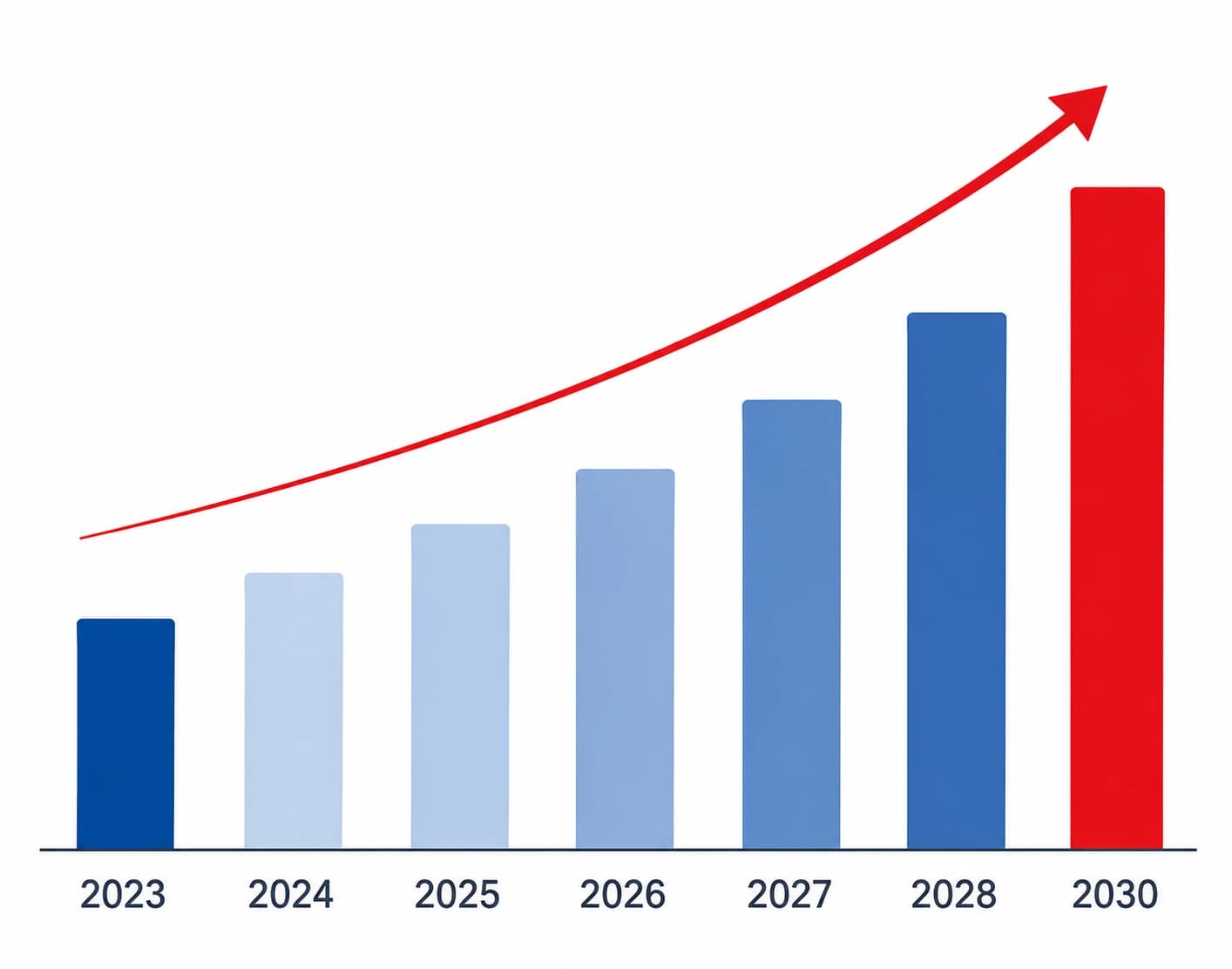
The global Silicon Photonics Wafer Foundry market was valued at US$ 485 million in 2025 and is anticipated to reach US$ 3737 million by 2032, witnessing a CAGR of 32.2% during the forecast period 2026-2032.
Silicon Photonics Wafer Foundry refers to wafer-level foundry services that provide process platforms, wafer fabrication, MPW shuttle runs, dedicated engineering runs, low-volume manufacturing and volume production for silicon photonic integrated circuits. The major process platforms include SOI-based silicon photonics, silicon/germanium-on-silicon photonic-electronic integration, silicon nitride photonics and heterogeneous integration platforms. These foundries fabricate photonic components such as optical waveguides, couplers, modulators, photodetectors, splitters, ring resonators and thermal tuners on semiconductor wafers, while supporting customers with PDKs, process libraries and design rules. The market scope should mainly cover wafer fabrication foundry revenue, excluding downstream optical modules, CPO systems, standalone packaging and testing services, pure design services and end-system revenue. In 2025, global silicon photonics wafer foundry shipments reached approximately 63.73 thousand equivalent 8-inch wafers, with an average ex-factory price of about USD 7,620 per wafer.
Silicon photonics wafer foundry is a specialized foundry business formed by the integration of semiconductor wafer manufacturing and photonic integration technologies. It mainly provides PDK support, MPW shuttle runs, dedicated engineering runs, low-volume manufacturing and volume production services for silicon photonic integrated circuits. Its major process platforms include SOI or silicon-based silicon photonics platforms, silicon nitride photonics platforms, and heterogeneous integration and other silicon-based photonics platforms. The fabricated photonic devices include optical waveguides, couplers, modulators, photodetectors, splitters, ring resonators and thermal tuners. Compared with traditional CMOS electronic IC foundry services, silicon photonics wafer foundry requires not only wafer-level uniformity and yield control, but also precise management of optical loss, coupling efficiency, polarization stability, thermal drift, photonic-electronic co-design, and packaging and testing compatibility.
At present, silicon photonics wafer foundry is still transitioning from R&D validation to commercial volume production, and its overall scale remains much smaller than that of CMOS logic foundry. Therefore, industry capacity should be described in terms of “effective commercial silicon photonics output capability” rather than the nominal capacity of semiconductor fabs. GlobalFoundries and Tower Semiconductor are currently among the most representative commercial silicon photonics foundry platforms, while imec, LioniX, SilTerra, VTT and IHP mainly play roles in MPW, prototyping, pilot production or specialty process platforms. With rising demand from AI data centers, high-speed optical modules, CPO and photonic-electronic integration, large semiconductor foundries such as TSMC, Samsung and UMC are also accelerating their silicon photonics platform development. Samsung further disclosed its progress in a 300mm silicon photonics foundry platform in 2026, while UMC is building a 12-inch silicon photonics platform by introducing imec’s iSiPP300 technology. As a result, the competitive landscape is shifting from specialized platforms toward broader participation by large-scale wafer foundries.
From the perspective of downstream demand, data center optical interconnects represent the most important growth area for silicon photonics wafer foundry. AI clusters, cloud computing and high-speed switching systems require higher bandwidth, lower power consumption and greater interconnect density, driving the adoption of silicon photonics in pluggable optical modules, CPO, OCS, scale-out and scale-up networks, and board-level optical interconnects. Non-data-center applications include telecom communication, coherent optical communication, LiDAR, industrial sensing, biosensing, quantum photonics and research projects. Although these orders are more fragmented and customized, they offer relatively high technical value. Since silicon photonics wafer foundry requires close coordination across process platforms, PDKs, packaging and testing, optical validation and customer qualification, its average gross margin is generally higher than that of conventional mature-node foundry services, typically in the range of approximately 25% to 40%. In the future, as 300mm platforms mature, customer orders ramp up and packaging and testing standardization improves, silicon photonics wafer foundry is expected to become a high-growth segment in photonic-electronic integrated semiconductor manufacturing.
This report aims to provide a comprehensive presentation of the global market for Silicon Photonics Wafer Foundry, with both quantitative and qualitative analysis, to help readers develop business/growth strategies, assess the market competitive situation, analyze their position in the current marketplace, and make informed business decisions regarding Silicon Photonics Wafer Foundry.
The Silicon Photonics Wafer Foundry market size, estimations, and forecasts are provided in terms of sales quantity (Units) and revenue ($ millions), considering 2025 as the base year, with history and forecast data for the period from 2021 to 2032. This report segments the global Silicon Photonics Wafer Foundry market comprehensively. Regional market sizes, concerning products by Type, by Application, and by players, are also provided.
For a more in-depth understanding of the market, the report provides profiles of the competitive landscape, key competitors, and their respective market ranks. The report also discusses technological trends and new product developments.
The report will help the Silicon Photonics Wafer Foundry manufacturers, new entrants, and industry chain related companies in this market with information on the revenues, sales, and average price for the overall market and the sub-segments across the different segments, by company, by Type, by Application, and by regions.
Chapter 1: Introduces the report scope of the report, executive summary of different market segments (by region, product type, application, etc), including the market size of each market segment, future development potential, and so on. It offers a high-level view of the current state of the market and its likely evolution in the short to mid-term, and long term.
Chapter 2: key insights, key emerging trends, etc.
Chapter 3: Manufacturers competitive analysis, detailed analysis of Silicon Photonics Wafer Foundry manufacturers competitive landscape, price, sales and revenue market share, latest development plan, merger, and acquisition information, etc.
Chapter 4: Provides profiles of key players, introducing the basic situation of the main companies in the market in detail, including product sales, revenue, price, gross margin, product introduction, recent development, etc.
Chapter 5 & 6: Sales, revenue of Silicon Photonics Wafer Foundry in regional level and country level. It provides a quantitative analysis of the market size and development potential of each region and its main countries and introduces the market development, future development prospects, market space, and market size of each country in the world.
Chapter 7: Provides the analysis of various market segments by Type, covering the market size and development potential of each market segment, to help readers find the blue ocean market in different market segments.
Chapter 8: Provides the analysis of various market segments by Application, covering the market size and development potential of each market segment, to help readers find the blue ocean market in different downstream markets.
Chapter 9: Analysis of industrial chain, including the upstream and downstream of the industry.
Chapter 10: The main points and conclusions of the report.
- ★ What Is The Overall Market Size And Projected Growth Rate Across Global And Regional Segments?
- ★ How Does The Market Size And Growth Outlook Vary Across Major Countries?
- ★ Which Region Or Market Sub-Segment Is Anticipated To Dominate Growth During The Forecast Period?
- ★ What Are The Primary Factors Expected To Drive Market Expansion, And What Challenges May Restrain Growth?
- ★ Which Emerging Technologies And Market Trends Are Shaping The Future Landscape?
- ★ What Are The Most Significant Opportunities Available In The Market?
- ★ Who Are The Leading Manufacturers Actively Participating In The Global Market?
- ★ Which Company Currently Holds The Largest Share Of The Market?
- ★ What Are The Potential Growth Avenues For New Entrants In The Global Market?