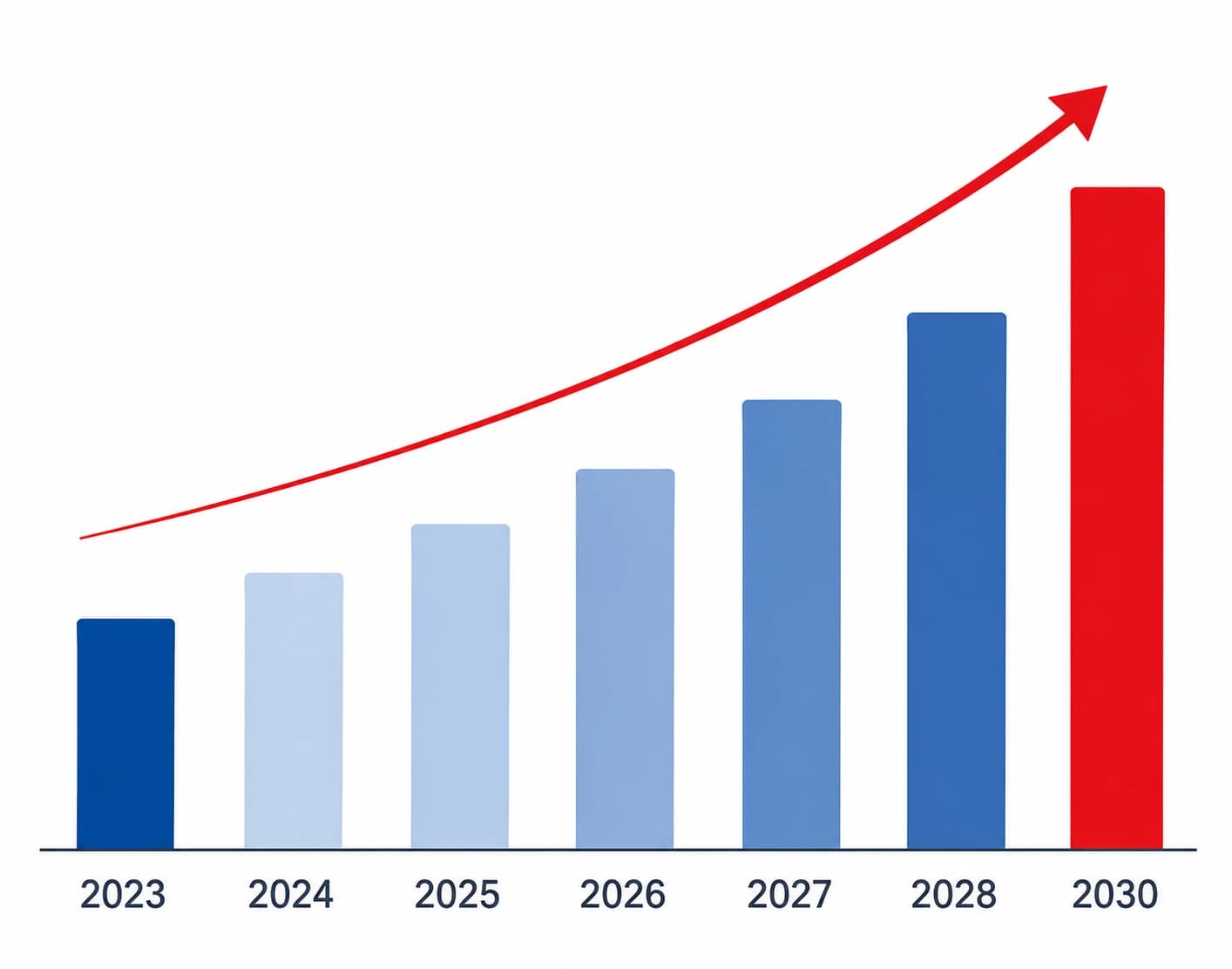
The global market for Probe Card Repair Services was estimated to be worth US$ 771 million in 2025 and is projected to reach US$ 1274 million, growing at a CAGR of 7.4% from 2026 to 2032.
Probe Card Repair Services refer to specialized technical services for the inspection, maintenance, repair, refurbishment, and performance restoration of probe cards used in semiconductor wafer probing and wafer sort operations. The service scope covers MEMS probe cards, vertical probe cards, cantilever probe cards, thin-film probe cards, and other specialized test interfaces. Typical procedures include fault diagnosis, probe cleaning, probe needle replacement, tip reshaping, probe alignment, planarization, coplanarity adjustment, electrical continuity testing, contact resistance verification, and structural restoration. These services aim to restore electrical contact reliability, mechanical precision, and stable testing performance while extending probe card service life and reducing replacement costs. Major customers include integrated device manufacturers, wafer foundries, semiconductor testing providers, and companies operating outsourced semiconductor assembly and test facilities.
Probe Card Repair Services are primarily supplied through global OEM service networks and independent specialist repair providers
Probe Card Repair Services in China generated RMB 4.56 million in disclosed 2025 repair revenue at MaxOne Semiconductor
MEMS and vertical probe card repairs require specialized precision engineering and electrical performance verification
Asia is a major Probe Card Repair Services region supported by Japan, South Korea, Taiwan and mainland China
HBM, DRAM and advanced logic testing are important demand drivers for high-reliability probe card maintenance
The Probe Card Repair Services market is evolving from conventional cleaning and needle replacement toward integrated lifecycle management and precision performance restoration. Increasing adoption of MEMS and vertical probe cards, higher pin counts, tighter contact tolerances, and more complex electrical architectures are raising the technical requirements for inspection, alignment, planarization, and post-repair validation. Customers are placing greater emphasis on repair turnaround time, repeatability, service traceability, and compatibility with existing wafer testing platforms. Automated inspection, precision positioning, laser-based processing, and specialized probe maintenance equipment are becoming increasingly relevant to service differentiation. Meanwhile, the growing value and customization of advanced probe cards strengthen the economic incentive to repair and refurbish existing assets rather than replace them immediately. The industry is therefore gradually shifting toward specialized, automated, and regionally distributed service capabilities.
The expansion of semiconductor wafer testing, particularly for HBM, DRAM, NAND, advanced logic, and AI processors, supports demand for probe card maintenance and repair. Increasing probe card complexity and replacement costs encourage semiconductor manufacturers to extend the useful life of existing testing interfaces. Higher testing utilization and continuous production requirements also increase the importance of rapid repair and maintenance services. In addition, the geographical expansion of semiconductor manufacturing and testing capacity creates demand for localized repair facilities that can reduce transportation time and production interruptions.
The market is constrained by the technical complexity of advanced probe card structures, the high investment requirements for precision inspection and repair equipment, and the limited availability of experienced technicians. Some advanced MEMS and customized probe cards require proprietary manufacturing knowledge, restricting third-party repair access. Free warranty services and OEM after-sales arrangements can also reduce the addressable market for independent repair providers. Furthermore, certain damaged probe cards may be technically or economically unsuitable for refurbishment, limiting the proportion of existing cards that can generate commercial repair demand.
Opportunities are concentrated in advanced MEMS and vertical probe card refurbishment, cross-brand repair services, automated probe inspection, and localized maintenance networks. The expansion of HBM and AI semiconductor testing creates opportunities for providers capable of handling high-density probe structures and demanding electrical performance requirements. Independent specialists can expand their customer base by supporting legacy probe cards, discontinued models, and products outside individual OEM service portfolios. Service providers can also increase revenue per customer through integrated cleaning, needle replacement, planarization, electrical verification, and preventive maintenance packages.
The industry faces challenges associated with inconsistent repair standards, customer qualification requirements, intellectual property protection, and the difficulty of verifying long-term performance after refurbishment. Different probe card architectures require distinct repair processes and validation methods, making standardized service delivery difficult. OEMs also retain advantages in proprietary designs, original components, and customer relationships. Independent providers must demonstrate consistent repair quality and maintain strict confidentiality to gain access to high-value semiconductor customers. Rapid product upgrades may further reduce the commercial value of repair capabilities developed for older probe card generations.
The upstream segment consists of probe needles, MEMS structures, substrates, printed circuit boards, precision mechanical components, cleaning materials, replacement parts, and specialized inspection and repair equipment. The midstream segment comprises probe card manufacturers offering original repair services, independent specialist repair companies, and authorized regional service providers. Their activities cover inspection, fault diagnosis, cleaning, probe replacement, alignment, planarization, electrical restoration, and post-repair verification. Downstream demand originates from semiconductor IDMs, wafer foundries, and OSAT providers operating wafer testing processes, while fabless companies may influence demand through their outsourced manufacturing and testing arrangements. Value creation is concentrated in technical diagnosis, precision restoration, repair yield, turnaround time, and post-repair reliability. Equipment investment, replacement components, skilled labor, and quality assurance represent important cost factors. OEMs benefit from proprietary technical knowledge and integrated customer relationships, whereas independent service providers compete through cross-brand compatibility, localized response, and specialized repair capabilities.
Probe Card Repair Services are primarily differentiated by service function and probe card architecture. Core service categories include inspection and fault diagnosis, cleaning and performance recovery, probe tip and needle repair, alignment and planarization, and electrical or structural restoration. Among probe card architectures, MEMS and vertical probe cards represent technically demanding service segments because their high-density contact structures require precise probe positioning, consistent coplanarity, and reliable electrical performance. Cantilever probe cards remain relevant for conventional and selected specialty testing applications, creating continued demand for cleaning, needle replacement, and mechanical adjustment. Thin-film and other specialized probe cards require repair processes adapted to their structural characteristics. Commercial value varies according to card complexity, damage severity, replacement component requirements, and repair verification procedures. Providers with advanced inspection capabilities, automated positioning, and reliable electrical testing can pursue higher-value repair projects and expand into more complex probe card generations.
Downstream Market Opportunities
The primary downstream customers for Probe Card Repair Services are semiconductor IDMs, wafer foundries, and OSAT providers. Memory testing, particularly DRAM, NAND, and HBM wafer testing, represents an important application area because continuous production and repeated probe contact create ongoing requirements for cleaning, needle maintenance, and performance restoration. Advanced logic and AI processor testing provide another important opportunity, as complex MEMS and vertical probe cards require more demanding inspection, alignment, and electrical verification. Analog, RF, power semiconductor, and image sensor testing also generate demand for specialized probe card maintenance. Procurement decisions are influenced by repair turnaround time, restoration success rate, electrical performance consistency, compatibility with existing testers, and service confidentiality. Providers can develop commercial opportunities through direct relationships with foundries and OSAT companies, cross-brand repair capabilities, localized service centers, and integrated maintenance contracts. Advanced probe card repair and rapid-response services are particularly relevant where replacement costs and production downtime are high.
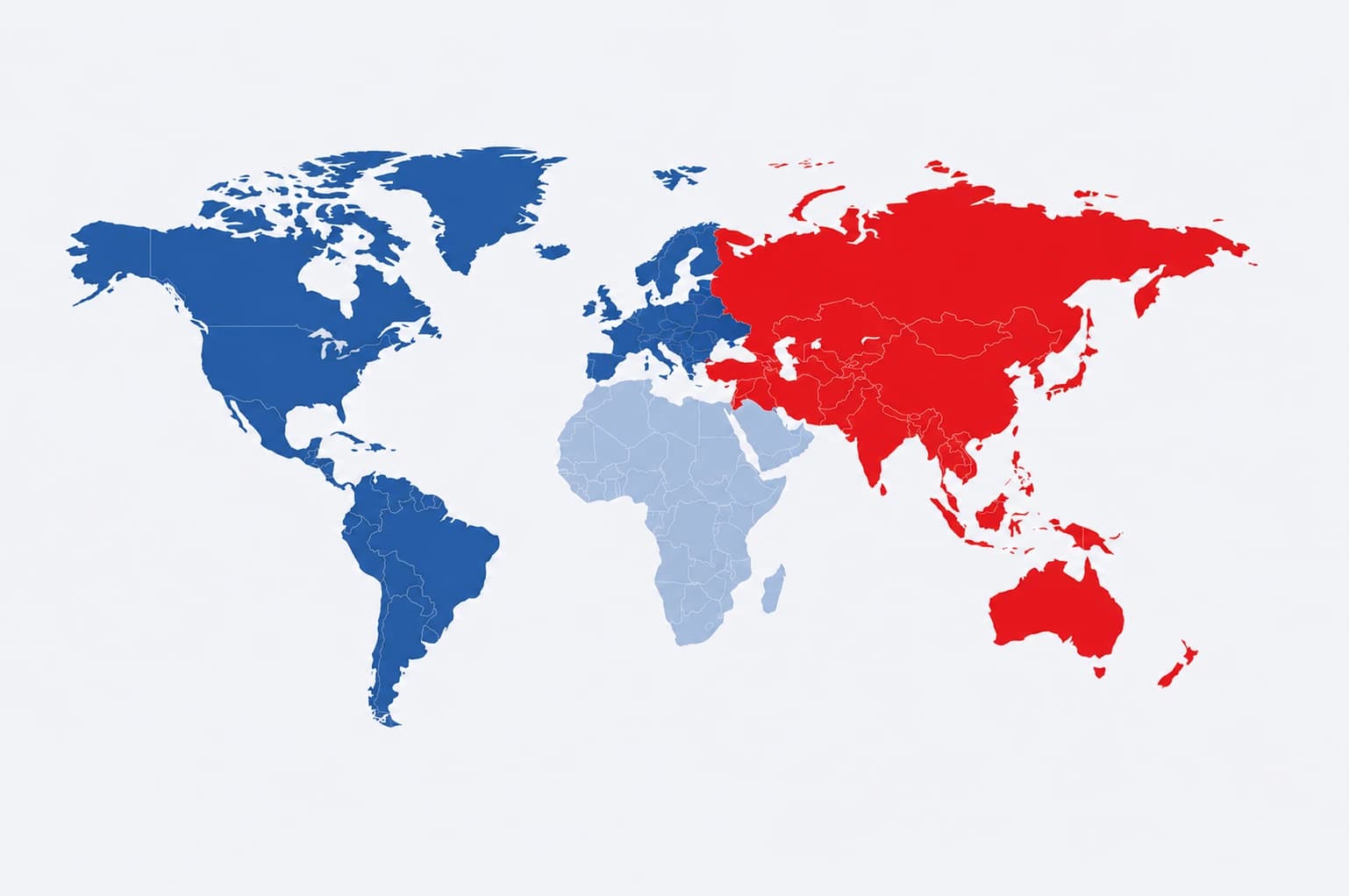
The global supply landscape is concentrated in established semiconductor manufacturing and testing regions, particularly North America, Europe, Japan, South Korea, Taiwan, and mainland China. North America maintains important capabilities in original equipment manufacturing and independent specialist repair services. Europe is characterized by specialized probe card manufacturers and multi-country service networks. Japan and South Korea benefit from established probe card manufacturing industries and integrated OEM maintenance capabilities. Taiwan combines a strong semiconductor testing ecosystem with specialized probe card service providers, while mainland China is developing domestic repair capabilities alongside its expanding probe card manufacturing base. Singapore serves as an important regional service location for international semiconductor suppliers, although many operating entities are affiliated with overseas parent companies. Future regional opportunities are expected to favor locations close to wafer fabrication and testing clusters, where localized maintenance can reduce logistics costs, repair turnaround time, and production interruptions. The development of domestic technical capabilities in China and the expansion of Asian service networks are particularly relevant to the industry's regional evolution.
Competitive Landscape Analysis
The global Probe Card Repair Services market features a combination of integrated OEM service networks and independent specialist repair providers. FormFactor, Inc., Micronics Japan Co., Ltd., FEINMETALL GmbH, Synergie CAD Group, and Nidec SV Probe represent important participants with probe card manufacturing or integrated technical service capabilities. Their competitive advantages are associated with proprietary product knowledge, established customer relationships, original components, and geographically distributed service infrastructure. TSE Co., Ltd. and Korea Instrument Co., Ltd. strengthen the Asian OEM service landscape, while MaxOne Semiconductor (Suzhou) Co., Ltd. demonstrates the development of domestic Chinese repair capabilities, including separately disclosed repair revenue. Accuprobe, KeithLink Technology, and Tiatech provide more specialized repair, inspection, and precision adjustment services. Independent providers generally compete through cross-brand compatibility, faster regional response, and specialized maintenance expertise. Future competition is expected to focus increasingly on advanced MEMS repair, automated inspection, repair consistency, localized service coverage, and the ability to support increasingly complex wafer testing interfaces.
This report provides a comprehensive view of the global market for Probe Card Repair Services, covering total sales revenue, the market share and ranking of key companies, along with analyses by region & country, by Type, and by Application.
The Probe Card Repair Services market size, estimations, and forecasts are presented in terms of sales revenue ($ millions), with 2025 as the base year and historical and forecast data from 2021 to 2032. The report combines quantitative and qualitative analysis to help readers develop growth strategies, assess the competitive landscape, evaluate their position in the current marketplace, and make informed business decisions regarding Probe Card Repair Services.
Chapter 1: Introduces the scope of the report and the global market size (value). It also summarizes market dynamics and recent developments; identifies key drivers and restraints; outlines challenges and risks for players; reviews relevant industry policies.
Chapter 2: Provides a detailed analysis of the Probe Card Repair Services companies' competitive landscape—including revenue shares, recent development plans, and mergers and acquisitions (M&A).
Chapter 3: Analyzes market segmentation by Type, presenting the size and growth potential of each segment to help readers identify blue-ocean opportunities.
Chapter 4: Analyzes market segmentation by Application, presenting the size and growth potential of each downstream segment to help readers identify blue-ocean opportunities.
Chapter 5: Presents Probe Card Repair Services revenue at the regional level. It offers a quantitative assessment of market size and growth potential by region and summarizes market development, future prospects, addressable space, and country-level market size worldwide.
Chapter 6: Presents Probe Card Repair Services revenue at the country level. It provides segmented data by Type and by Application for each country/region.
Chapter 7: Profiles key players, detailing the main companies' product revenue, gross margin, product portfolios, recent developments, etc.
Chapter 8: Analysis of Value Chain, including the upstream and downstream of the industry.
- ★ What Is The Overall Market Size And Projected Growth Rate Across Global And Regional Segments?
- ★ How Does The Market Size And Growth Outlook Vary Across Major Countries?
- ★ Which Region Or Market Sub-Segment Is Anticipated To Dominate Growth During The Forecast Period?
- ★ What Are The Primary Factors Expected To Drive Market Expansion, And What Challenges May Restrain Growth?
- ★ Which Emerging Technologies And Market Trends Are Shaping The Future Landscape?
- ★ What Are The Most Significant Opportunities Available In The Market?
- ★ Who Are The Leading Manufacturers Actively Participating In The Global Market?
- ★ Which Company Currently Holds The Largest Share Of The Market?
- ★ What Are The Potential Growth Avenues For New Entrants In The Global Market?