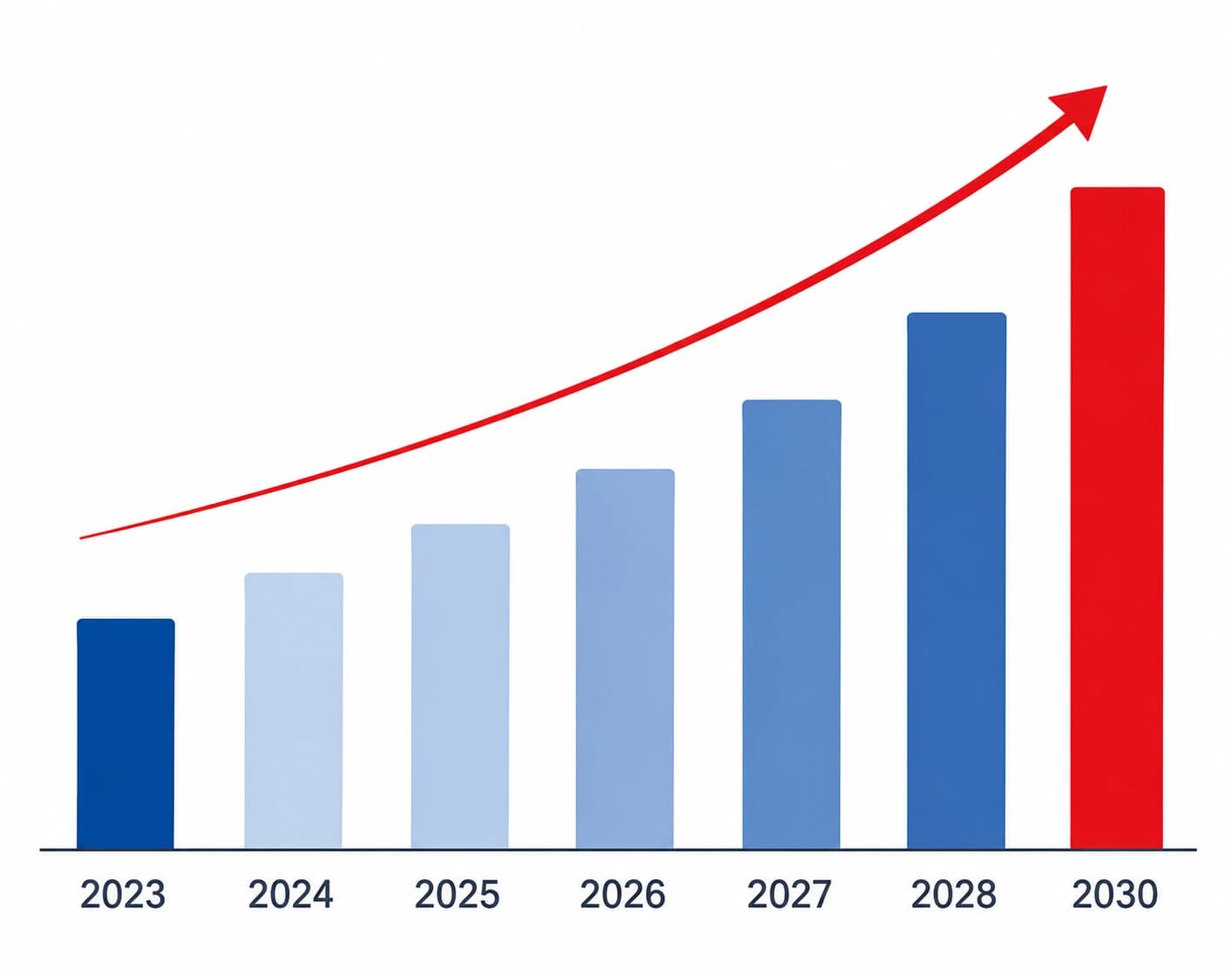
The global Hot-dip Galvanized Strip market was valued at US$ 15300 million in 2025 and is anticipated to reach US$ 21150 million by 2032, witnessing a CAGR of 4.8% during the forecast period 2026-2032.
In 2024, global Hot-dip Galvanized Strip production reached approximately 12,373 thousand tons, with an average global market price of around US$ 1,180 per ton. The gross profit margin of major companies in the industry ranges from 12% to 22%. Single-line production capacity typically ranges from 150,000 to 380,000 tons per year depending on plant size and coating technology.
Hot-dip galvanized strip is produced by immersing steel strip into molten zinc to form a metallurgically bonded protective coating with strong corrosion resistance. It offers uniform coating thickness, high adhesion, and excellent atmospheric durability, making it suitable for construction components, automotive structures, and appliance parts. Its mechanical strength and long-term anti-rust performance allow it to withstand outdoor exposure, coastal climates, and high-humidity environments.
The industrial chain includes upstream suppliers of hot-rolled or cold-rolled steel coils, zinc ingots, fluxing chemicals, and surface treatment additives. Midstream manufacturers operate continuous galvanizing lines involving cleaning, annealing, hot-dip coating, air-knife control, passivation, and finishing. Downstream applications include building steel fabrication, automobile body and chassis production, home appliance manufacturing, agricultural equipment, and various industrial component sectors.
The market for hot-dip galvanized strip is driven by strong demand from construction, infrastructure, and automotive industries, where corrosion resistance and long service life are essential. Rapid urbanization, transportation projects, and renovation of aging buildings increase the need for galvanized roofing sheets, wall panels, structural elements, and guardrails. In the automotive sector, galvanized strip is widely used for body panels, chassis parts, crash components, and protective structures to improve durability. Appliance and HVAC manufacturers rely on galvanized strip for cabinets, frames, and enclosures. Technological improvements in coating control, high-strength steel compatibility, and environmentally friendly galvanizing processes are enhancing performance and reducing operational emissions. With global investment in infrastructure and the tightening of durability standards, demand for hot-dip galvanized strip is expected to remain stable and steadily increase.
This report aims to provide a comprehensive presentation of the global market for Hot-dip Galvanized Strip, with both quantitative and qualitative analysis, to help readers develop business/growth strategies, assess the market competitive situation, analyze their position in the current marketplace, and make informed business decisions regarding Hot-dip Galvanized Strip.
The Hot-dip Galvanized Strip market size, estimations, and forecasts are provided in terms of sales quantity (Kilotons) and revenue ($ millions), considering 2025 as the base year, with history and forecast data for the period from 2021 to 2032. This report segments the global Hot-dip Galvanized Strip market comprehensively. Regional market sizes, concerning products by Type, by Application, and by players, are also provided.
For a more in-depth understanding of the market, the report provides profiles of the competitive landscape, key competitors, and their respective market ranks. The report also discusses technological trends and new product developments.
The report will help the Hot-dip Galvanized Strip manufacturers, new entrants, and industry chain related companies in this market with information on the revenues, sales, and average price for the overall market and the sub-segments across the different segments, by company, by Type, by Application, and by regions.
Chapter 1: Introduces the report scope of the report, executive summary of different market segments (by region, product type, application, etc), including the market size of each market segment, future development potential, and so on. It offers a high-level view of the current state of the market and its likely evolution in the short to mid-term, and long term.
Chapter 2: key insights, key emerging trends, etc.
Chapter 3: Manufacturers competitive analysis, detailed analysis of Hot-dip Galvanized Strip manufacturers competitive landscape, price, sales and revenue market share, latest development plan, merger, and acquisition information, etc.
Chapter 4: Provides profiles of key players, introducing the basic situation of the main companies in the market in detail, including product sales, revenue, price, gross margin, product introduction, recent development, etc.
Chapter 5 & 6: Sales, revenue of Hot-dip Galvanized Strip in regional level and country level. It provides a quantitative analysis of the market size and development potential of each region and its main countries and introduces the market development, future development prospects, market space, and market size of each country in the world.
Chapter 7: Provides the analysis of various market segments by Type, covering the market size and development potential of each market segment, to help readers find the blue ocean market in different market segments.
Chapter 8: Provides the analysis of various market segments by Application, covering the market size and development potential of each market segment, to help readers find the blue ocean market in different downstream markets.
Chapter 9: Analysis of industrial chain, including the upstream and downstream of the industry.
Chapter 10: The main points and conclusions of the report.
- ★ What Is The Overall Market Size And Projected Growth Rate Across Global And Regional Segments?
- ★ How Does The Market Size And Growth Outlook Vary Across Major Countries?
- ★ Which Region Or Market Sub-Segment Is Anticipated To Dominate Growth During The Forecast Period?
- ★ What Are The Primary Factors Expected To Drive Market Expansion, And What Challenges May Restrain Growth?
- ★ Which Emerging Technologies And Market Trends Are Shaping The Future Landscape?
- ★ What Are The Most Significant Opportunities Available In The Market?
- ★ Who Are The Leading Manufacturers Actively Participating In The Global Market?
- ★ Which Company Currently Holds The Largest Share Of The Market?
- ★ What Are The Potential Growth Avenues For New Entrants In The Global Market?