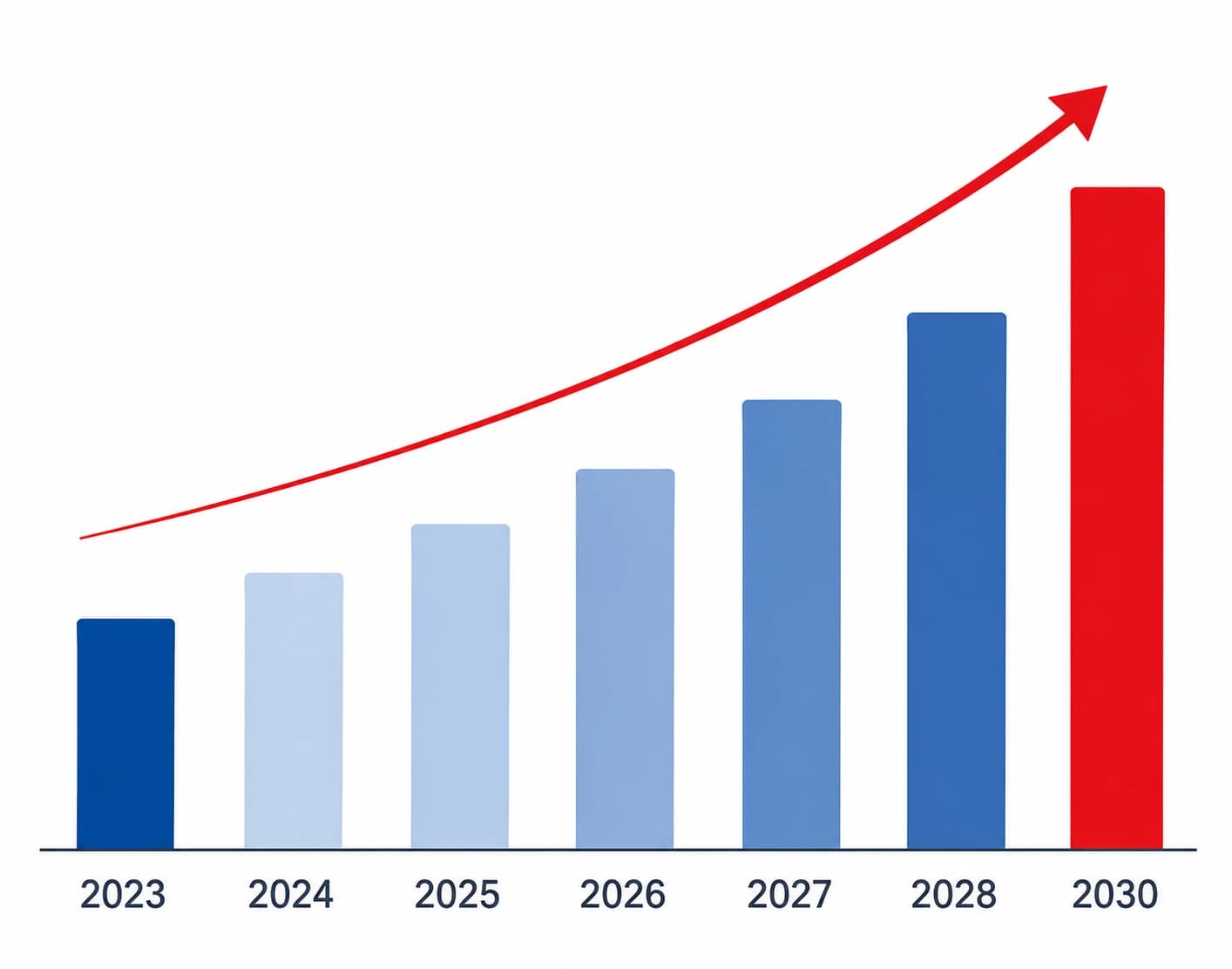
The global market for Intelligent Computing Cloud Service was estimated to be worth US$ 144500 million in 2025 and is projected to reach US$ 825148 million, growing at a CAGR of 28.3% from 2026 to 2032.
Intelligent Computing Cloud Services refer to cloud-based services that provide enterprises, research institutions, AI developers, and other users with on-demand access to high-performance AI computing resources, storage, networking, and related platform capabilities through cloud computing infrastructure and intelligent resource orchestration technologies. The underlying infrastructure typically consists of GPUs, dedicated AI accelerators, high-performance CPUs, high-speed interconnect networks, distributed storage systems, and supporting data center facilities. Through virtualization, containerization, cluster management, and intelligent scheduling, these services enable centralized resource management, elastic allocation, and flexible consumption of computing capacity. Intelligent Computing Cloud Services primarily encompass GPU cloud instances, AI computing capacity rental, bare-metal computing, distributed AI training clusters, AI inference services, and AI development platforms. They support large language model training and fine-tuning, generative artificial intelligence, machine learning, computer vision, natural language processing, scientific computing, and industry-specific AI applications. Common commercial models include pay-as-you-go pricing, subscription-based services, reserved capacity, dedicated clusters, and customized computing solutions. By providing scalable AI infrastructure and computing platforms, these services help customers reduce upfront infrastructure investment, improve computing resource utilization, and meet diverse requirements for processing performance, elasticity, data security, and service reliability.
AI model training and inference services constitute the principal application-oriented segments of the Intelligent Computing Cloud Service market
Inference services are gaining strategic importance as artificial intelligence applications expand from development into commercial deployment
North America and Asia-Pacific are important regional markets supported by AI infrastructure investment and expanding enterprise adoption
Computing efficiency, resource availability, service reliability, and cost optimization are central factors shaping competition among cloud service providers
The Intelligent Computing Cloud Service market is undergoing a transition from infrastructure-oriented computing resource provision toward integrated AI training, inference, and intelligent resource management services. As artificial intelligence applications become increasingly complex, customers are placing greater emphasis on computing performance, cluster scalability, resource utilization, and the ability to support diverse model architectures. Model training services are evolving toward large-scale distributed computing, high-speed accelerator interconnection, optimized memory management, and more efficient scheduling of computing workloads. At the same time, inference services are becoming increasingly important as generative AI applications move from experimental development to continuous commercial operation. Cloud platforms are improving inference efficiency through model quantization, batching, caching, heterogeneous computing, and dynamic resource allocation. The growing adoption of smaller specialized models, multimodal AI systems, and industry-specific applications is also encouraging more flexible service configurations. Another important trend is the integration of computing infrastructure with model development tools, data management, security controls, and automated deployment capabilities. In the longer term, intelligent computing cloud services are expected to emphasize performance optimization, energy efficiency, predictable service quality, and integrated management of training and inference workloads.
The rapid development of artificial intelligence technologies and the increasing adoption of AI applications across industries are major drivers of the Intelligent Computing Cloud Service market. Large language models, generative AI, computer vision, intelligent automation, and advanced data analytics require substantial computing resources for model development, training, optimization, and deployment. Cloud-based intelligent computing services allow enterprises and research institutions to obtain computing capacity according to their actual requirements, reducing the need for substantial upfront infrastructure investment and shortening application development cycles. The growing complexity of AI models is increasing demand for high-performance accelerator clusters, distributed computing frameworks, and reliable storage and networking infrastructure. Meanwhile, the commercial deployment of AI applications is generating recurring demand for inference computing resources. Digital transformation initiatives in financial services, healthcare, manufacturing, scientific research, and public services are further supporting the adoption of cloud-based AI computing solutions. Improvements in cloud resource management and computing infrastructure accessibility are also encouraging a broader range of organizations to develop and deploy AI applications.
High infrastructure investment requirements, computing resource constraints, and operating cost pressures remain important factors limiting the development of Intelligent Computing Cloud Service. Advanced AI computing infrastructure depends on specialized accelerators, high-bandwidth memory, high-speed networking equipment, large-scale storage systems, and reliable power and cooling facilities. The procurement and operation of these resources require substantial capital expenditure and continuous technology upgrades. Fluctuations in accelerator availability and differences in hardware compatibility may affect computing capacity expansion and service delivery. For customers, the cost of long-duration model training and high-volume inference can become a significant consideration, particularly when computing utilization is inefficient or application demand is unpredictable. Data security, privacy protection, regulatory compliance, and restrictions on cross-border data processing may also limit cloud adoption in sensitive industries. In addition, differences in software ecosystems, development frameworks, and cloud platform interfaces can increase migration costs and create challenges for organizations seeking flexible deployment across multiple computing environments.
The commercialization of generative AI and the expansion of enterprise AI applications are creating substantial opportunities for Intelligent Computing Cloud Service providers. As more organizations integrate AI capabilities into business processes, demand is expanding beyond model development toward continuous inference, model customization, automated deployment, and application lifecycle management. Industry-specific AI solutions create opportunities for specialized computing services tailored to financial risk management, medical data analysis, industrial quality inspection, scientific simulation, and public administration. The development of efficient inference architectures, heterogeneous computing platforms, and intelligent workload scheduling can improve resource utilization and support more competitive service delivery. Private and hybrid cloud deployments also provide opportunities for customers with demanding data security, performance isolation, and regulatory requirements. Furthermore, the increasing adoption of multimodal AI, autonomous agents, and real-time intelligent applications may create new requirements for low-latency computing, elastic resource allocation, and integrated model serving platforms. Providers capable of combining computing infrastructure, development tools, and industry-oriented technical services are positioned to capture additional market opportunities.
The Intelligent Computing Cloud Service industry faces challenges associated with rapid technological evolution, infrastructure efficiency, service reliability, and increasingly complex customer requirements. AI accelerator architectures, model development frameworks, and inference optimization technologies continue to change, creating pressure on service providers to upgrade infrastructure while maintaining acceptable investment returns. Large-scale distributed training requires efficient communication between computing nodes, stable network performance, and effective fault management, while commercial inference services must maintain low latency, consistent throughput, and high availability under fluctuating workloads. Balancing computing resource utilization with service responsiveness is particularly challenging when customer demand varies significantly over time. Energy consumption, power availability, and cooling requirements are becoming important operational considerations as computing clusters expand. Service providers must also address data protection, cybersecurity, model isolation, and regulatory compliance across different jurisdictions. Maintaining competitive pricing while supporting advanced hardware, reliable operations, and continuous platform innovation remains a major challenge for sustainable business development.
The Intelligent Computing Cloud Service value chain consists of upstream computing infrastructure and technology suppliers, midstream cloud computing platform operators, and downstream enterprise and institutional customers. Upstream activities include the development and supply of AI accelerators, processors, high-performance servers, networking equipment, storage systems, data center infrastructure, and supporting software technologies. Midstream service providers integrate these resources into scalable computing environments through virtualization, container orchestration, distributed computing frameworks, resource scheduling systems, and cloud service management platforms. Their principal value creation activities include computing capacity aggregation, infrastructure utilization optimization, workload scheduling, service availability management, security protection, and the provision of accessible AI training and inference capabilities. Downstream customers include internet businesses, financial institutions, healthcare organizations, manufacturing enterprises, research institutions, government agencies, and other organizations adopting artificial intelligence. The industry is increasingly characterized by closer integration between infrastructure operations, AI development platforms, model deployment systems, and application-specific services. Efficient coordination across the value chain is essential for reducing computing costs, improving service quality, and supporting the commercial deployment of artificial intelligence applications.
By service type, the Intelligent Computing Cloud Service market is primarily divided into model training services and inference services. Model training services provide computing resources and supporting software environments for pretraining, fine-tuning, distributed learning, and model optimization. These services emphasize accelerator performance, cluster scalability, high-speed interconnection, memory capacity, storage throughput, and distributed computing efficiency. They are particularly important for organizations developing large language models, multimodal systems, and specialized artificial intelligence models. Inference services provide computing capabilities for deploying trained models and processing application requests, with greater emphasis on response latency, throughput, concurrency, elasticity, and operating cost efficiency. As AI applications enter large-scale commercial operation, inference services are becoming an increasingly important source of recurring computing demand. The distinction between training and inference is also influencing infrastructure architecture, resource allocation strategies, and pricing models. By downstream application, the market covers internet services, finance, healthcare, manufacturing, scientific research, government, and other sectors. Different industries exhibit distinct requirements for computing performance, data security, service availability, deployment flexibility, and regulatory compliance, supporting the development of increasingly specialized intelligent computing cloud solutions.
Downstream Market Opportunities
The downstream development of Intelligent Computing Cloud Service is closely associated with the adoption of artificial intelligence across commercial, industrial, scientific, and public-sector applications. Internet companies require scalable computing resources for content generation, recommendation systems, intelligent search, conversational AI, and other digital services. Financial institutions are expanding the use of AI in risk assessment, fraud detection, customer service, document processing, and operational automation, creating demand for secure and reliable computing environments. Healthcare organizations can apply AI computing services to medical imaging analysis, clinical research, pharmaceutical development, and healthcare data processing, subject to applicable data protection requirements. Manufacturing enterprises are developing applications in quality inspection, predictive maintenance, industrial automation, and production optimization. Scientific research institutions require flexible computing resources for advanced simulations, machine learning experiments, and large-scale data analysis, while government organizations are exploring AI applications in public administration and digital service delivery. The increasing demand for customized AI applications, continuous model inference, and secure deployment environments is expected to create opportunities for specialized cloud computing services.
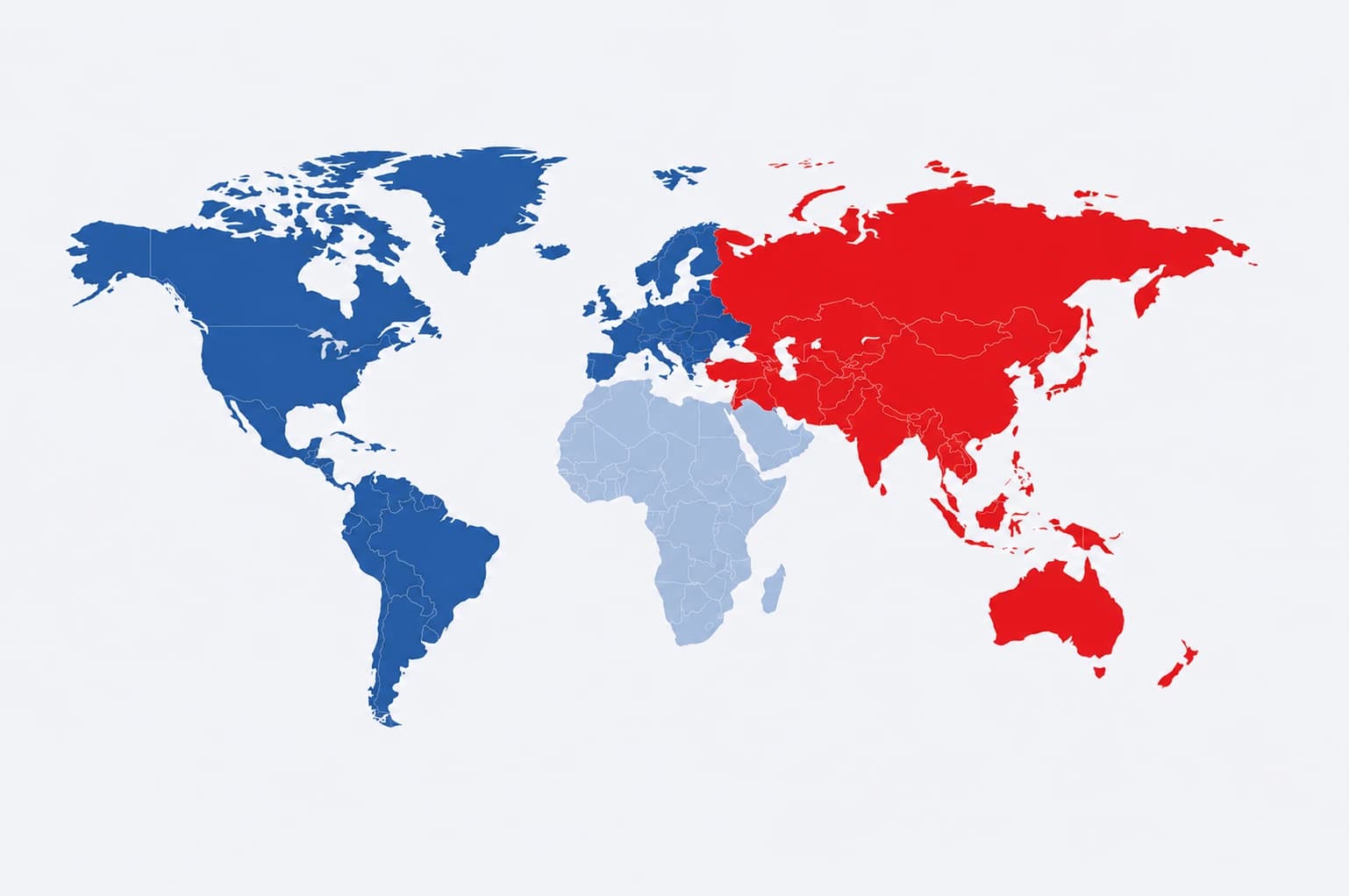
North America, Asia-Pacific, and Europe are major regional markets for Intelligent Computing Cloud Service, reflecting differences in AI technology development, computing infrastructure investment, enterprise digitalization, and regulatory environments. North America has a mature cloud computing ecosystem, substantial AI research capabilities, and strong demand for large-scale model training and commercial inference services. Asia-Pacific represents an important market supported by extensive digital infrastructure development, growing enterprise AI adoption, and increasing investment in intelligent computing capacity. China has an expanding intelligent computing ecosystem serving internet platforms, industrial enterprises, research institutions, and public-sector applications. Japan and South Korea are advancing AI adoption in manufacturing, electronics, telecommunications, and enterprise services, while Taiwan contributes through its semiconductor and computing technology ecosystem. Southeast Asian markets are developing additional opportunities as data center investment, digital services, and enterprise AI applications expand. Europe is characterized by strong enterprise demand, industrial AI applications, and increasing emphasis on data sovereignty, security, and regulatory compliance. Regional market development is influenced by computing infrastructure availability, electricity costs, data governance requirements, technological capabilities, and the pace of AI commercialization.
Competitive Landscape Analysis
The global Intelligent Computing Cloud Service market is characterized by competition among integrated cloud computing providers, specialized AI computing cloud operators, and platform-oriented AI service providers. Large integrated cloud platforms generally compete through infrastructure scale, geographic coverage, service portfolios, enterprise customer relationships, and the integration of computing resources with broader cloud software ecosystems. Specialized intelligent computing providers focus on accelerator availability, high-performance computing clusters, flexible resource allocation, optimized training environments, and competitive computing efficiency. Providers emphasizing inference services increasingly differentiate themselves through model deployment efficiency, low-latency processing, throughput optimization, and application-oriented service capabilities. Competition is also shaped by hardware procurement capacity, data center operations, energy efficiency, cybersecurity, regulatory compliance, and technical support. As enterprise AI adoption becomes more sophisticated, customers are placing greater emphasis on predictable computing performance, transparent pricing, service reliability, and the ability to support different AI frameworks and deployment architectures. The competitive landscape is therefore evolving from a primary focus on computing capacity toward comprehensive capabilities in infrastructure management, software integration, cost optimization, and industry-specific service delivery.
This report provides a comprehensive view of the global market for Intelligent Computing Cloud Service, covering total sales revenue, the market share and ranking of key companies, along with analyses by region & country, by Type, and by Application.
The Intelligent Computing Cloud Service market size, estimations, and forecasts are presented in terms of sales revenue ($ millions), with 2025 as the base year and historical and forecast data from 2021 to 2032. The report combines quantitative and qualitative analysis to help readers develop growth strategies, assess the competitive landscape, evaluate their position in the current marketplace, and make informed business decisions regarding Intelligent Computing Cloud Service.
Chapter 1: Introduces the scope of the report and the global market size (value). It also summarizes market dynamics and recent developments; identifies key drivers and restraints; outlines challenges and risks for players; reviews relevant industry policies.
Chapter 2: Provides a detailed analysis of the Intelligent Computing Cloud Service companies' competitive landscape—including revenue shares, recent development plans, and mergers and acquisitions (M&A).
Chapter 3: Analyzes market segmentation by Type, presenting the size and growth potential of each segment to help readers identify blue-ocean opportunities.
Chapter 4: Analyzes market segmentation by Application, presenting the size and growth potential of each downstream segment to help readers identify blue-ocean opportunities.
Chapter 5: Presents Intelligent Computing Cloud Service revenue at the regional level. It offers a quantitative assessment of market size and growth potential by region and summarizes market development, future prospects, addressable space, and country-level market size worldwide.
Chapter 6: Presents Intelligent Computing Cloud Service revenue at the country level. It provides segmented data by Type and by Application for each country/region.
Chapter 7: Profiles key players, detailing the main companies' product revenue, gross margin, product portfolios, recent developments, etc.
Chapter 8: Analysis of Value Chain, including the upstream and downstream of the industry.
- ★ What Is The Overall Market Size And Projected Growth Rate Across Global And Regional Segments?
- ★ How Does The Market Size And Growth Outlook Vary Across Major Countries?
- ★ Which Region Or Market Sub-Segment Is Anticipated To Dominate Growth During The Forecast Period?
- ★ What Are The Primary Factors Expected To Drive Market Expansion, And What Challenges May Restrain Growth?
- ★ Which Emerging Technologies And Market Trends Are Shaping The Future Landscape?
- ★ What Are The Most Significant Opportunities Available In The Market?
- ★ Who Are The Leading Manufacturers Actively Participating In The Global Market?
- ★ Which Company Currently Holds The Largest Share Of The Market?
- ★ What Are The Potential Growth Avenues For New Entrants In The Global Market?