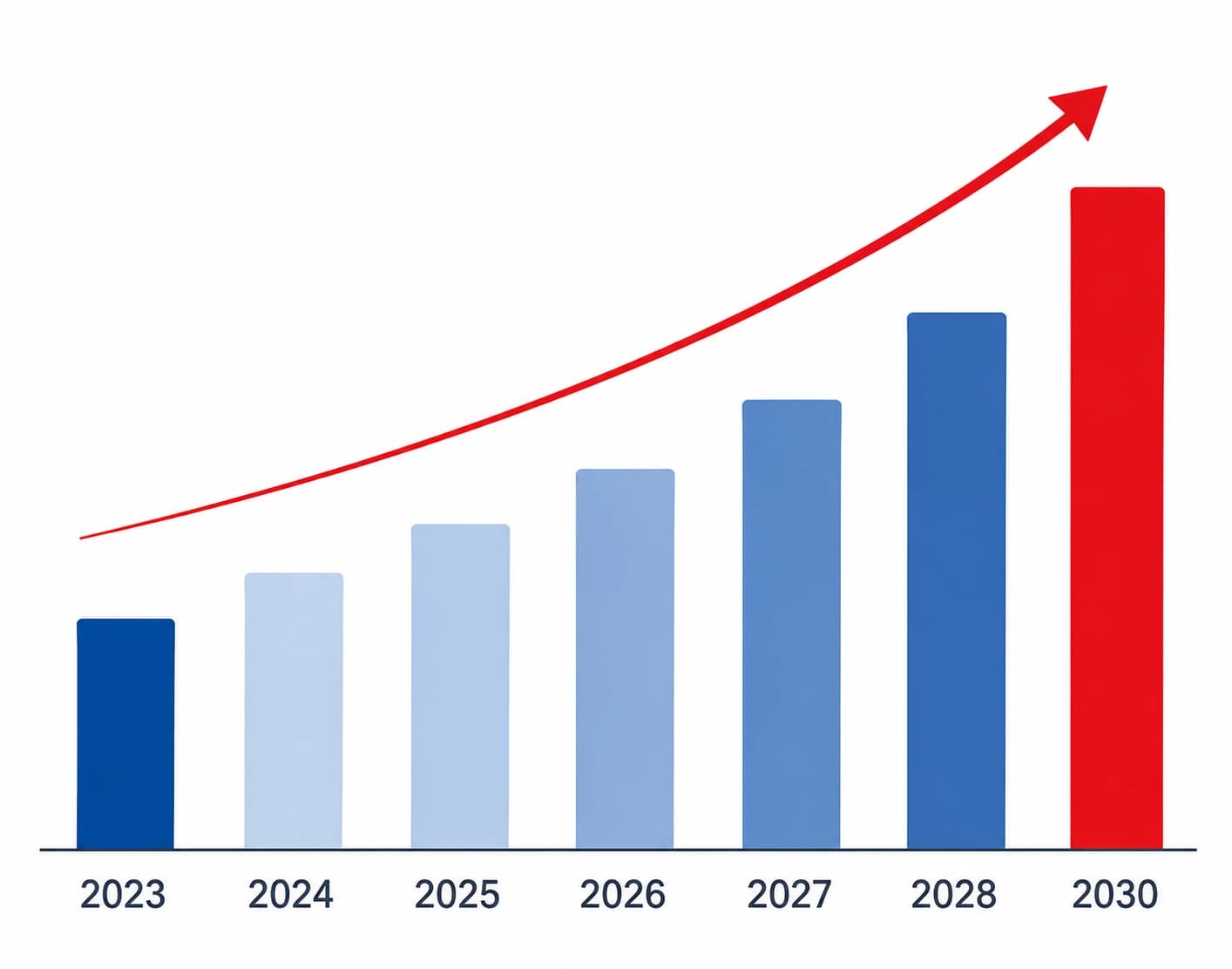
The global Industrial Grade Vinylene Carbonate (VC) market was valued at US$ 1014 million in 2025 and is anticipated to reach US$ 1870 million by 2032, witnessing a CAGR of 8.9% during the forecast period 2026-2032.
Industrial Grade Vinylene Carbonate (VC) is a high-purity cyclic organic compound with the chemical formula C₃H₂O₃ (CAS 872-36-6). It is a colorless transparent liquid primarily used as an additive in lithium-ion battery electrolytes, resin modifiers, and other industrial applications. Its properties include excellent chemical stability, low volatility, and film-forming capabilities, making it suitable for large-scale production and industrial requirements . In lithium-ion batteries, VC forms a stable solid electrolyte interphase (SEI) layer on battery anodes, reducing degradation and enabling high-performance energy storage . Industrial grade VC typically has a purity specification of ≥99.95% (GC) to meet the stringent requirements of lithium-ion battery applications .
The upstream segment includes suppliers of ethylene oxide, carbon dioxide, chlorine, triethylamine, and other raw materials . The midstream segment encompasses synthesis (via chlorination and esterification routes), purification, distillation, quality testing (GC purity analysis), and packaging performed by specialized chemical manufacturers. Industrial grade vinylene carbonate is categorized by purity grade into standard industrial grade (≥99.0%) and battery-grade (≥99.95%) ; by application into lithium-ion battery electrolytes (dominant), resin modifiers, polymer synthesis intermediates, and other industrial chemicals . The downstream segment serves lithium-ion battery manufacturers, electrolyte formulators, resin producers, and chemical intermediates buyers.
The global average selling price for industrial grade vinylene carbonate is approximately US$16,300 per ton, with annual sales volume reaching approximately 62,200 tons in 2025. The industry maintains gross margins between 20% and 35%.
The global industrial grade vinylene carbonate market is experiencing robust growth, driven by the rapid expansion of the lithium-ion battery industry, particularly for electric vehicles and energy storage systems. VC is the most widely used electrolyte additive, accounting for approximately 42% of the electrolyte additive market share by volume . As battery manufacturers pursue higher energy density, longer cycle life, and improved safety, the demand for high-purity VC continues to escalate.
A notable trend reshaping the market is the capacity expansion race among Chinese manufacturers. Total domestic VC capacity reached approximately 105,000 tons/year in 2024, though industry operating rates remained below 50% due to oversupply . By October 2025, capacity utilization had recovered to 67.8% as demand caught up . Major capacity expansion projects include Jiangsu HSC New Energy Materials' 60,000-ton VC project with a total investment of RMB 1.6 billion, to be constructed in two phases starting with 30,000 tons .
Another significant development is the industry consolidation and vertical integration trend. Leading producers such as Huasheng Lithium Battery, Shandong Genyuan (Gengyuan), Capchem Technology (Xinzhoubang), and Yongtai Technology dominate the global market . Smaller, less efficient producers have been squeezed out by the price competition and tightening environmental regulations. The shift toward automated, closed-loop production systems has become a competitive necessity.
This report aims to provide a comprehensive presentation of the global market for Industrial Grade Vinylene Carbonate (VC), with both quantitative and qualitative analysis, to help readers develop business/growth strategies, assess the market competitive situation, analyze their position in the current marketplace, and make informed business decisions regarding Industrial Grade Vinylene Carbonate (VC).
The Industrial Grade Vinylene Carbonate (VC) market size, estimations, and forecasts are provided in terms of sales quantity (Kilotons) and revenue ($ millions), considering 2025 as the base year, with history and forecast data for the period from 2021 to 2032. This report segments the global Industrial Grade Vinylene Carbonate (VC) market comprehensively. Regional market sizes, concerning products by Type, by Application, and by players, are also provided.
For a more in-depth understanding of the market, the report provides profiles of the competitive landscape, key competitors, and their respective market ranks. The report also discusses technological trends and new product developments.
The report will help the Industrial Grade Vinylene Carbonate (VC) manufacturers, new entrants, and industry chain related companies in this market with information on the revenues, sales, and average price for the overall market and the sub-segments across the different segments, by company, by Type, by Application, and by regions.
Chapter 1: Introduces the report scope of the report, executive summary of different market segments (by region, product type, application, etc), including the market size of each market segment, future development potential, and so on. It offers a high-level view of the current state of the market and its likely evolution in the short to mid-term, and long term.
Chapter 2: key insights, key emerging trends, etc.
Chapter 3: Manufacturers competitive analysis, detailed analysis of Industrial Grade Vinylene Carbonate (VC) manufacturers competitive landscape, price, sales and revenue market share, latest development plan, merger, and acquisition information, etc.
Chapter 4: Provides profiles of key players, introducing the basic situation of the main companies in the market in detail, including product sales, revenue, price, gross margin, product introduction, recent development, etc.
Chapter 5 & 6: Sales, revenue of Industrial Grade Vinylene Carbonate (VC) in regional level and country level. It provides a quantitative analysis of the market size and development potential of each region and its main countries and introduces the market development, future development prospects, market space, and market size of each country in the world.
Chapter 7: Provides the analysis of various market segments by Type, covering the market size and development potential of each market segment, to help readers find the blue ocean market in different market segments.
Chapter 8: Provides the analysis of various market segments by Application, covering the market size and development potential of each market segment, to help readers find the blue ocean market in different downstream markets.
Chapter 9: Analysis of industrial chain, including the upstream and downstream of the industry.
Chapter 10: The main points and conclusions of the report.
- ★ What Is The Overall Market Size And Projected Growth Rate Across Global And Regional Segments?
- ★ How Does The Market Size And Growth Outlook Vary Across Major Countries?
- ★ Which Region Or Market Sub-Segment Is Anticipated To Dominate Growth During The Forecast Period?
- ★ What Are The Primary Factors Expected To Drive Market Expansion, And What Challenges May Restrain Growth?
- ★ Which Emerging Technologies And Market Trends Are Shaping The Future Landscape?
- ★ What Are The Most Significant Opportunities Available In The Market?
- ★ Who Are The Leading Manufacturers Actively Participating In The Global Market?
- ★ Which Company Currently Holds The Largest Share Of The Market?
- ★ What Are The Potential Growth Avenues For New Entrants In The Global Market?