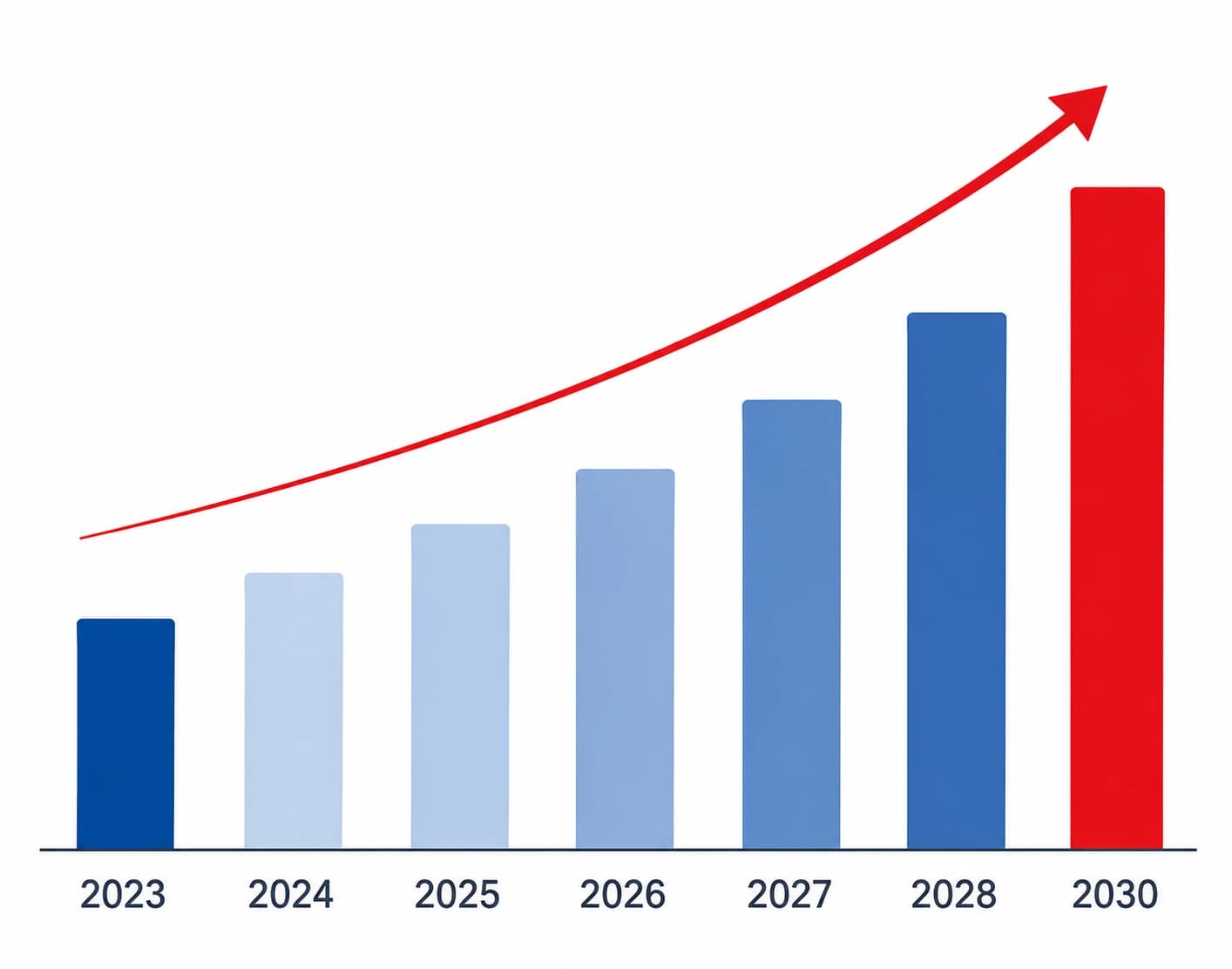
The global Laser Light Source for Semiconductor Equipment market was valued at US$ 3368 million in 2025 and is anticipated to reach US$ 6424 million by 2032, witnessing a CAGR of 8.7% during the forecast period 2026-2032.
Laser Sources for Semiconductor Manufacturing Equipment refer to high-stability laser sources, laser light-source modules, and laser-driven illumination systems embedded in or supplied for semiconductor manufacturing tools. These products are used in wafer fabrication, lithography exposure, mask and reticle inspection, wafer defect inspection, thin-film metrology, scatterometry, ellipsometry, wafer marking, stealth dicing, laser dicing, laser annealing, and selected advanced-packaging processes. They are typically supplied as critical optical subsystems rather than stand-alone end-user machines, and their competitiveness is determined by wavelength, linewidth, pulse duration, pulse energy, repetition rate, power stability, beam quality, pointing stability, uptime, maintenance interval, and integration capability with semiconductor equipment OEM platforms. The main technology routes include ArF/KrF excimer lasers, high-power CO₂ drive lasers for EUV source generation, deep-ultraviolet solid-state lasers, DPSS lasers, picosecond and femtosecond ultrafast lasers, fiber lasers, and laser-driven broadband or plasma light sources.
According to our research, laser sources for semiconductor manufacturing equipment should be analyzed as a high-barrier optical subsystem market rather than as a generic industrial laser market. The key value is created by short wavelength generation, long-term power and pointing stability, narrow linewidth, low noise, high uptime, and deep integration with semiconductor tool OEM platforms. Lithography light sources represent the highest-value and most concentrated segment. DUV lithography remains dominated by specialized excimer light-source suppliers, while EUV industrialization relies on the integration of a high-power CO₂ drive laser, tin droplet generation, vacuum source architecture, collector optics, debris mitigation, and system-level control. Compared with ordinary micromachining lasers, semiconductor equipment laser sources have longer qualification cycles, higher reliability requirements, and stronger lifecycle lock-in once they are designed into a tool platform.
From a supply-chain perspective, the market is structured around a small number of high-barrier lithography light-source leaders, several diversified photonics platform companies, and a group of specialized small and medium-sized laser manufacturers. ASML/Cymer, Gigaphoton, and TRUMPF occupy highly strategic positions in lithography and EUV-related light-source systems. Coherent, MKS/Spectra-Physics, Hamamatsu/Energetiq/NKT, Excelitas, Novanta, and IPG participate across inspection, metrology, OEM photonics subsystems, and selected wafer processing applications. Smaller companies such as TOPTICA, Spectronix, Xiton Photonics, CryLaS, HÜBNER Photonics, and Skylark Lasers play important roles in narrow-linewidth, DUV, 193 nm, 266 nm, single-frequency, and ultrafast niches. In China, Beijing RSLaser, CNI Laser, Inno Laser, JPT, Focuslight, and Huaray Laser represent the emerging domestic supply base, but most are still transitioning from industrial or research-grade laser products toward semiconductor tool-grade qualification.
Demand growth is being driven not only by semiconductor capital expenditure, but also by increasing optical source value per tool. Advanced logic, HBM, 3D NAND, advanced packaging, SiC/GaN power devices, and high-end sensors all raise the performance requirements for light sources embedded in manufacturing tools. In lithography, installed-base maintenance, ArF immersion, EUV, and High-NA EUV create a resilient demand base. In inspection and metrology, shrinking defect sizes and more complex film stacks drive demand for DUV, UV, broadband, and low-noise laser-driven sources. In wafer processing, stealth dicing, laser annealing, glass substrate processing, TGV formation, and advanced packaging materials processing support broader adoption of picosecond and femtosecond ultrafast lasers.
Technology evolution is moving along three major directions. Lithography light sources are being upgraded toward higher power, higher availability, longer service intervals, and lower cost of ownership. Inspection and metrology sources are moving toward shorter wavelengths, higher brightness, lower noise, wider spectral coverage, and better long-term stability. Wafer processing sources are shifting toward ultrafast, multi-wavelength, higher-power, and tool-integrated architectures. Competition is therefore moving beyond nominal power or price. The decisive factors are OEM co-development capability, stable supply of optical and electronic subsystems, global service coverage, software controllability, cleanroom-compatible reliability, and the ability to pass fab-level qualification.
Policy and supply-chain localization are becoming increasingly important. Major semiconductor regions are reinforcing fab construction, equipment supply security, and local service capability. This does not immediately replace incumbent high-end light-source suppliers, but it increases the strategic value of local repair, refurbishment, spare parts, and second-source development. In China, domestic substitution is most likely to progress first in mature-node lithography support, wafer inspection auxiliary sources, power semiconductor wafer processing, laser trimming, marking, and selected advanced-packaging processes. High-end ArF immersion and leading-edge inspection platforms will require longer qualification cycles, more stable component supply, and deeper cooperation with domestic equipment OEMs.
This report aims to provide a comprehensive presentation of the global market for Laser Light Source for Semiconductor Equipment, with both quantitative and qualitative analysis, to help readers develop business/growth strategies, assess the market competitive situation, analyze their position in the current marketplace, and make informed business decisions regarding Laser Light Source for Semiconductor Equipment.
The Laser Light Source for Semiconductor Equipment market size, estimations, and forecasts are provided in terms of sales quantity (Units) and revenue ($ millions), considering 2025 as the base year, with history and forecast data for the period from 2021 to 2032. This report segments the global Laser Light Source for Semiconductor Equipment market comprehensively. Regional market sizes, concerning products By Technology Route, by Application, and by players, are also provided.
For a more in-depth understanding of the market, the report provides profiles of the competitive landscape, key competitors, and their respective market ranks. The report also discusses technological trends and new product developments.
The report will help the Laser Light Source for Semiconductor Equipment manufacturers, new entrants, and industry chain related companies in this market with information on the revenues, sales, and average price for the overall market and the sub-segments across the different segments, by company, By Technology Route, by Application, and by regions.
Chapter 1: Introduces the report scope of the report, executive summary of different market segments (by region, product type, application, etc), including the market size of each market segment, future development potential, and so on. It offers a high-level view of the current state of the market and its likely evolution in the short to mid-term, and long term.
Chapter 2: key insights, key emerging trends, etc.
Chapter 3: Manufacturers competitive analysis, detailed analysis of Laser Light Source for Semiconductor Equipment manufacturers competitive landscape, price, sales and revenue market share, latest development plan, merger, and acquisition information, etc.
Chapter 4: Provides profiles of key players, introducing the basic situation of the main companies in the market in detail, including product sales, revenue, price, gross margin, product introduction, recent development, etc.
Chapter 5 & 6: Sales, revenue of Laser Light Source for Semiconductor Equipment in regional level and country level. It provides a quantitative analysis of the market size and development potential of each region and its main countries and introduces the market development, future development prospects, market space, and market size of each country in the world.
Chapter 7: Provides the analysis of various market segments By Technology Route, covering the market size and development potential of each market segment, to help readers find the blue ocean market in different market segments.
Chapter 8: Provides the analysis of various market segments by Application, covering the market size and development potential of each market segment, to help readers find the blue ocean market in different downstream markets.
Chapter 9: Analysis of industrial chain, including the upstream and downstream of the industry.
Chapter 10: The main points and conclusions of the report.
- ★ What Is The Overall Market Size And Projected Growth Rate Across Global And Regional Segments?
- ★ How Does The Market Size And Growth Outlook Vary Across Major Countries?
- ★ Which Region Or Market Sub-Segment Is Anticipated To Dominate Growth During The Forecast Period?
- ★ What Are The Primary Factors Expected To Drive Market Expansion, And What Challenges May Restrain Growth?
- ★ Which Emerging Technologies And Market Trends Are Shaping The Future Landscape?
- ★ What Are The Most Significant Opportunities Available In The Market?
- ★ Who Are The Leading Manufacturers Actively Participating In The Global Market?
- ★ Which Company Currently Holds The Largest Share Of The Market?
- ★ What Are The Potential Growth Avenues For New Entrants In The Global Market?