Silicone elastomers are compounded using reactive, straight chained molecules together with a cross-linking agent and reinforcement to give good mechanical properties (elasticity, absorption, tear strength). Silicones are high-performance polymers that exhibit properties of both inorganic and organic compounds. Silicone elastomers are made with a combination of linear polymers, reinforcing agents, a crosslinker and a catalyst. The viscosity and type of the basic straight-chain molecule combined with the processing temperature determine the type of elastomer produced: Heat Cured Rubber (HCR), Liquid Silicone Rubber (LSR), and Room Temperature Vulcanization (RTV). These elastomers can be reinforced with either mineral fillers, such as silica, alumina, calcium carbonate, silicone resins, etc. Radical, condensation or addition crosslinking reactions may be used depending on the technology chosen to meet precise processing requirements. A wide variety of additives can be added to the elastomer in its final composition to ensure specific characteristics (color, rheology, pot life, etc.) or performance standards (electrical insulation or conduction, heat transfer, fire retardancy, chemical adhesion, mold release, etc.).
Silicones have a multitude of characteristics including heat resistance, cold resistance, weatherability, water repellency, defoaming properties, adhesiveness, releasability and dielectric properties. Silicone products are used in numerous ways to improve safety and reliability, and to make automobiles smaller, lighter and more eco-friendly.
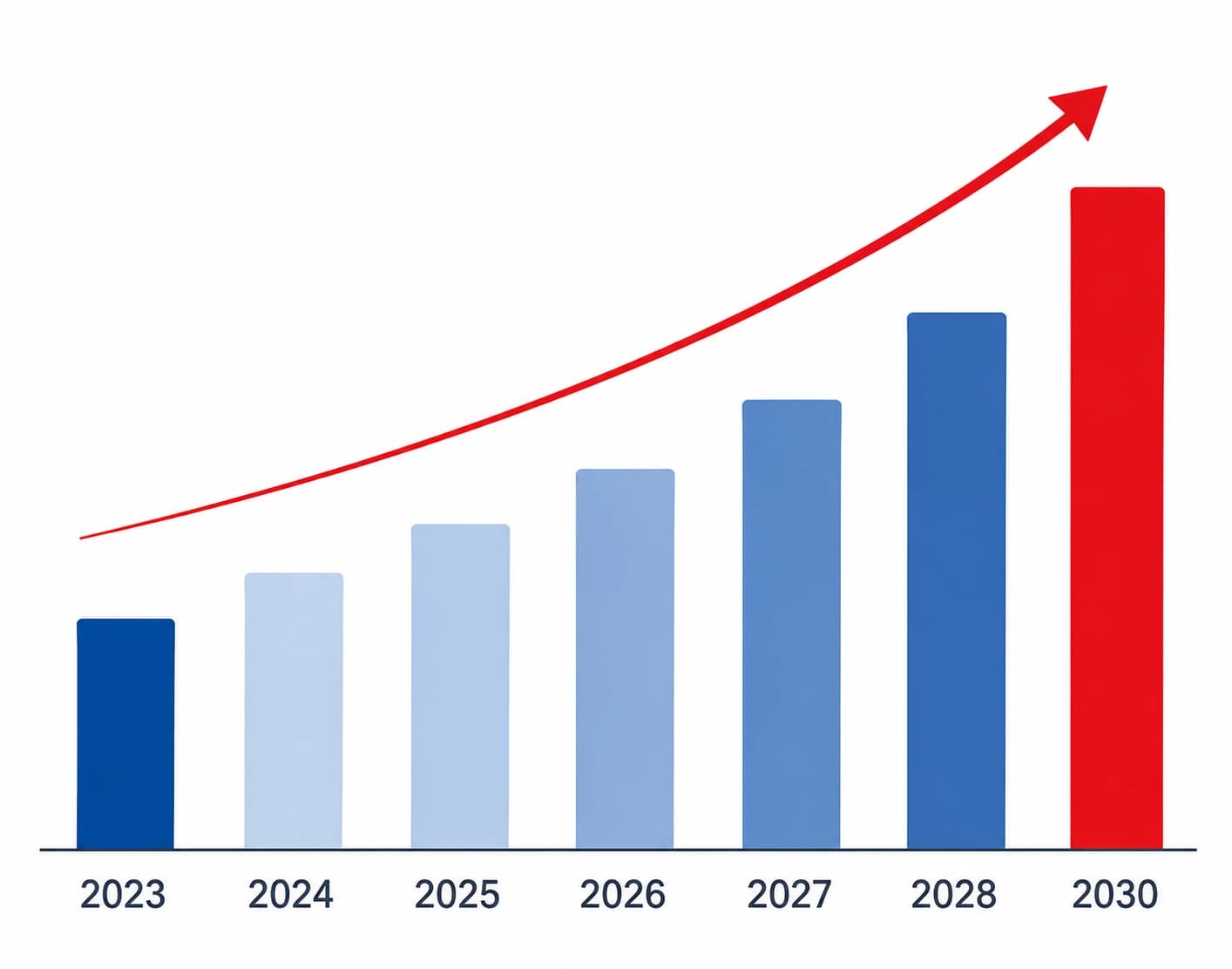
According to our latest report, the global market for Automotive Silicone Elastomers should grow from US$ million in 2023 to US$ million by 2030, with a CAGR of % for the period of 2024-2030. While India market for Automotive Silicone Elastomers is estimated to increase from US$ million in 2023 to US$ million by 2030, at a CAGR of % from 2024 through 2030. By country, India accounted for percent of the global market in 2023 and Indian market share will reach percent in 2030.
In the vast global economic landscape, India stands out with its rapid rise and unwavering determination to pursue new heights. With its rich cultural heritage and a population of over 1.4 billion, India has become an economic powerhouse, constantly showcasing its strength on the global stage. India, with its strong economic foundation, strong domestic demand, cautious financial management, high savings rate, and favorable population trends, has become the fifth largest economy in the world in terms of GDP. The country's major economic contributors are traditional and modern agriculture, technology services, the handicraft industry, and business outsourcing.
This report studies and analyses global and India Automotive Silicone Elastomers status and future trends, helps the client to determine the Automotive Silicone Elastomers market size of the total market opportunity by Type, by Application, by company, and by region & country. This report is a detailed and comprehensive analysis of the world market for Automotive Silicone Elastomers, and provides market size (in K MT & US$ million) and Year-over-Year growth, considering 2023 as the base year.
For a more in-depth understanding of the market, the report provides profiles of the competitive landscape, key competitors, and their respective market ranks. The report also discusses technological trends and new product developments.
To assess the competitive environment within the market including supplier revenue, market share, and company profiles.
(1) Global Automotive Silicone Elastomers sales & revenue, history data 2019-2024, and forecast data 2025-2030, (US$ million) & (K MT)
(2) India Automotive Silicone Elastomers sales & revenue, history data 2019-2024, and forecast data 2025-2030, (US$ million) & (K MT)
(3) Global Automotive Silicone Elastomers production, history data 2019-2024, and forecast data 2025-2030, (K MT)
(4) India Automotive Silicone Elastomers production, history data 2019-2024, and forecast data 2025-2030, (K MT)
(5) Global Automotive Silicone Elastomers sales, revenue, price by company, market share and industry ranking 2019-2024, (US$ million) & (K MT)
(6) India Automotive Silicone Elastomers sales, revenue, price by company, market share and industry ranking 2019-2024, (US$ million) & (K MT)
(7) Global Automotive Silicone Elastomers sales, revenue, price by region, 2019-2024, (US$ million) & (K MT)
(8) India Automotive Silicone Elastomers sales, production, export & import, market demand and development opportunities
(9) Automotive Silicone Elastomers industry chains, upstream, midstream and downstream
(10) Global production of Automotive Silicone Elastomers by region, 2025-2030, (K MT)
(11) Company profile, SWOT analysis and selected customer name List, etc.
Chapter 1: Introduces Automotive Silicone Elastomers definition, global sales (volume and revenue), India market size, India percentage in global market. This section also introduces the market dynamics, latest developments of the market, the driving factors and restrictive factors of the market, the challenges and risks faced by companies in the industry, and the analysis of relevant policies in the industry.
Chapter 2: Automotive Silicone Elastomers production/output of global and key producers (regions/countries). It provides a quantitative analysis of the production, and development potential of each producer in the next six years.
Chapter 3: Provides the analysis of various market segments by Type, covering the volume, price, revenue, and development potential of each market segment, to help readers find the blue ocean market in different market segments.
Chapter 4: Provides the analysis of various market segments by Application, covering the revenue, price, volume, and development potential of each market segment, to help readers find the blue ocean market in different downstream markets.
Chapter 5: Global market share of Automotive Silicone Elastomers.
Chapter 6: India market share of Automotive Silicone Elastomers.
Chapter 7: Revenue and volume of Automotive Silicone Elastomers in global and regional level. It provides a quantitative analysis of the market size and development potential of each region and introduces the market development, future development prospects, market space, and capacity of each country in the world.
Chapter 8: Provides profiles of key companies, introducing the basic situation of the main companies in the market in detail, including product descriptions and specifications, Automotive Silicone Elastomers sales, revenue, gross margin, SWOT and recent development, selected customer name List, etc.
Chapter 9: Analysis of industrial chain, sales channel, key raw materials, distributors, and customers.
Chapter 10: Research findings and conclusion
- ★ What Is The Overall Market Size And Projected Growth Rate Across Global And Regional Segments?
- ★ How Does The Market Size And Growth Outlook Vary Across Major Countries?
- ★ Which Region Or Market Sub-Segment Is Anticipated To Dominate Growth During The Forecast Period?
- ★ What Are The Primary Factors Expected To Drive Market Expansion, And What Challenges May Restrain Growth?
- ★ Which Emerging Technologies And Market Trends Are Shaping The Future Landscape?
- ★ What Are The Most Significant Opportunities Available In The Market?
- ★ Who Are The Leading Manufacturers Actively Participating In The Global Market?
- ★ Which Company Currently Holds The Largest Share Of The Market?
- ★ What Are The Potential Growth Avenues For New Entrants In The Global Market?