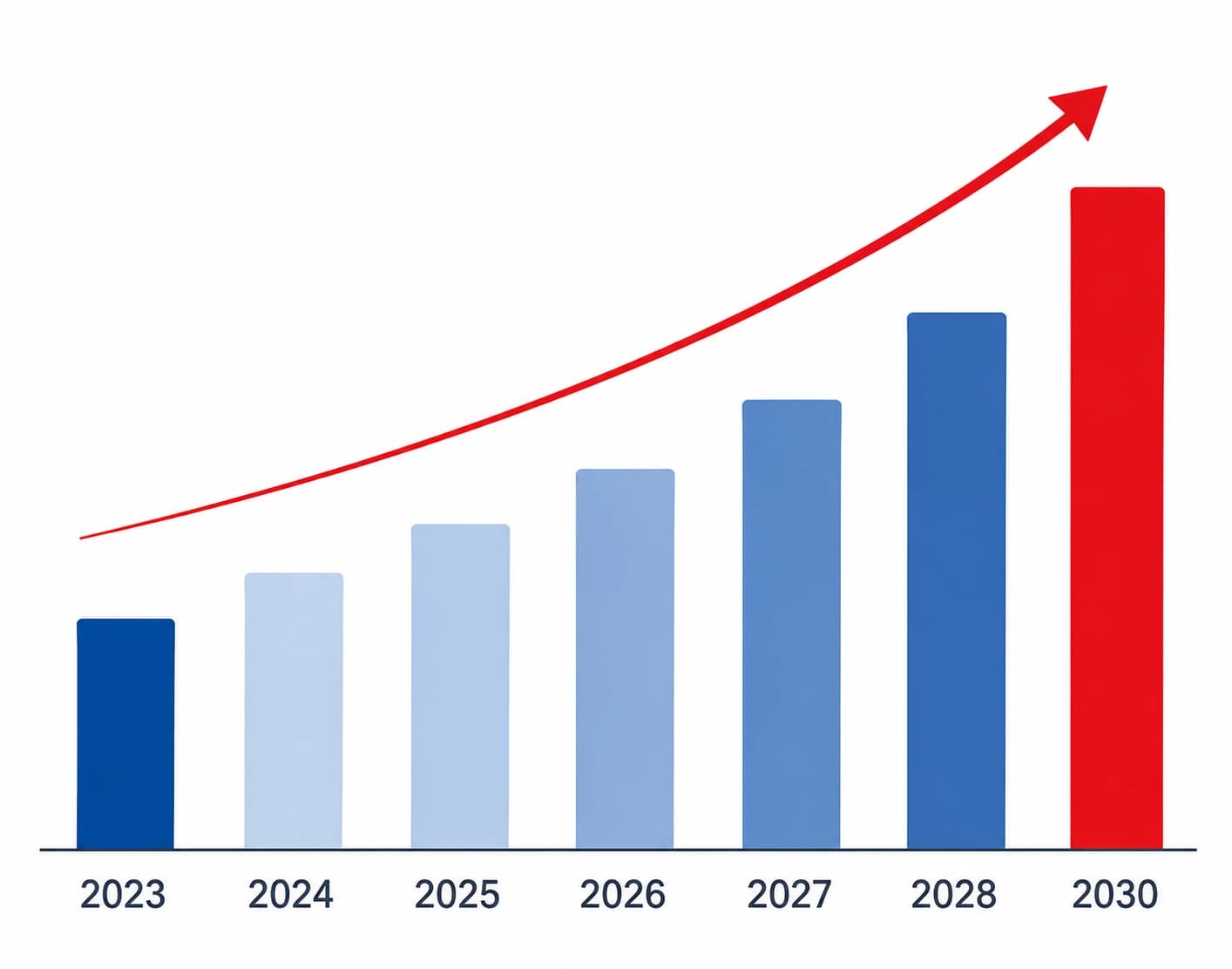
The global market for CMM Offline Programming Software was estimated to be worth US$ 106 million in 2025 and is projected to reach US$ 166 million, growing at a CAGR of 6.5% from 2026 to 2032.
CMM Offline Programming Software refers to specialized industrial metrology software that enables users to create, edit, optimize, simulate, and validate coordinate measuring machine (CMM) inspection programs in a virtual environment before execution on physical measurement equipment. These solutions use 3D CAD models, geometric dimensioning and tolerancing (GD&T) information, product manufacturing information (PMI), machine configurations, and probing-system models to establish coordinate alignments, define measurement strategies, generate probing sequences, and optimize inspection paths. Core capabilities include CAD-based feature recognition, measurement planning, automated program generation, virtual CMM simulation, collision detection, multi-axis probing, and compatibility with different CMM controllers and programming environments. Advanced solutions further support model-based definition (MBD), automated inspection planning, multi-sensor measurement, and digital inspection workflows. The software is primarily used in industrial quality assurance, first-article inspection, dimensional verification, and complex component measurement across automotive, aerospace, precision machinery, electronics, and medical device manufacturing.
CMM Offline Programming Software enables inspection programs to be developed and simulated without occupying physical CMM equipment
CMM Offline Programming Software supply comprises OEM-integrated platforms and independent multi-vendor programming solutions
Europe and North America are major CMM offline programming software development hubs, while China is strengthening domestic capabilities
Automotive, aerospace and precision machinery are established application markets, with electronics and medical devices providing additional opportunities
CMM offline programming software is evolving from conventional CAD-guided interactive programming toward automated, model-driven inspection planning and virtual measurement simulation. The integration of PMI and MBD information is reducing manual feature selection and measurement strategy preparation, while automated path generation, collision detection, and multi-axis probing simulation are improving programming efficiency and inspection reliability. Another important development is the increasing demand for cross-platform compatibility, allowing manufacturers to reuse measurement programs across different CMM brands, controllers, and production facilities. Software products are also becoming more closely integrated with digital manufacturing and quality management environments, connecting engineering design, production inspection, and dimensional measurement data. Over the longer term, competitive differentiation is expected to depend increasingly on automated programming capabilities, simulation accuracy, equipment compatibility, and the ability to standardize inspection workflows across geographically distributed manufacturing operations.
Demand for CMM offline programming software is supported by manufacturers' need to improve measuring machine utilization, shorten inspection preparation cycles, and reduce production interruptions caused by on-machine programming. Increasing component complexity and stricter dimensional quality requirements are creating additional demand for CAD-based measurement planning, automated feature recognition, and virtual inspection verification. The expansion of precision manufacturing, aerospace production, automotive component development, and advanced industrial machinery is further supporting the adoption of specialized metrology software. In addition, manufacturers operating multiple CMM brands are increasingly interested in standardized programming environments that improve program reuse, reduce dependence on individual programmers, and facilitate consistent inspection procedures across production facilities.
Market adoption is constrained by relatively high software licensing and implementation costs, particularly for advanced offline programming platforms requiring customized machine configurations, probing models, and controller interfaces. The complexity of existing measurement workflows also creates training requirements and implementation barriers for manufacturers with limited metrology software expertise. Compatibility differences among CMM brands, controllers, programming languages, and legacy equipment can restrict program portability and increase integration expenses. Furthermore, some equipment manufacturers bundle offline programming functions with CMM hardware or broader inspection software packages, reducing the transparency of standalone software pricing and limiting the commercial opportunities for independent module providers. For smaller manufacturers, the initial investment may be difficult to justify when inspection volumes and programming complexity remain relatively low.
Important opportunities are emerging from the modernization of existing CMM installations, particularly among manufacturers operating mixed fleets of different equipment brands. Cross-platform offline programming, legacy equipment compatibility, and centralized inspection program management can provide additional software licensing and service opportunities without requiring customers to replace existing measuring machines. Automated PMI interpretation, MBD-based inspection planning, five-axis programming, and virtual collision verification also create opportunities for higher-value software modules. In China, increasing demand for domestically developed industrial measurement software and localized technical support provides opportunities for domestic suppliers to expand their presence in precision manufacturing. Software providers can further develop recurring revenue through maintenance subscriptions, additional programming seats, advanced functional modules, and standardized deployment across multiple production sites.
The industry faces continuing challenges in maintaining measurement program reliability, cross-brand interoperability, and consistency between virtual simulations and actual machine operations. Differences in machine kinematics, probing configurations, controller architectures, and software versions can affect program portability and increase the complexity of validation. The interpretation of complex CAD and PMI information also requires reliable geometric algorithms and standardized data interfaces. In addition, customers often depend on established measurement workflows and accumulated inspection programs, making software replacement and migration difficult. As automated programming and integrated metrology platforms become more capable, specialized offline programming providers must continuously improve their technical differentiation while managing development costs, long-term product support, and the commercial pressure created by bundled software solutions.
The value chain of CMM offline programming software begins with upstream technologies and data resources, including 3D CAD geometry, PMI and MBD information, geometric calculation engines, metrology algorithms, probing-system models, machine kinematics, controller interfaces, and standardized communication technologies. These components provide the technical foundation for accurate measurement planning and virtual inspection simulation. Midstream activities involve software architecture development, feature recognition, measurement strategy generation, probing path optimization, collision detection, virtual machine modeling, program post-processing, and compatibility testing. Software providers commercialize these capabilities through standalone licenses, integrated CMM software modules, advanced functional packages, and maintenance services. Downstream customers include automotive and aerospace manufacturers, precision machinery producers, industrial quality laboratories, and contract inspection organizations. Value creation is concentrated in proprietary metrology algorithms, reliable machine compatibility, automated programming efficiency, and long-term customer support. Major cost components include software research and development, controller integration, equipment validation, technical training, and continuous product maintenance. The ability to convert complex measurement requirements into reusable and reliable inspection programs is the central source of competitive value.
CMM offline programming software can be differentiated by product architecture, programming workflow, and supported measurement configurations. From a product architecture perspective, OEM-integrated offline software is closely associated with specific equipment ecosystems and provides advantages in machine compatibility and technical support, while independent multi-vendor software addresses manufacturers operating heterogeneous CMM fleets. CAD/MBD-integrated solutions represent another important direction, connecting engineering models and dimensional specifications directly with inspection planning. In terms of programming workflow, CAD-guided interactive programming remains an established approach for complex measurement tasks requiring experienced operator judgment, whereas rule-based automated programming is gaining importance through PMI interpretation, automated feature recognition, and predefined measurement strategies. Conventional three-axis CMM applications provide an established software foundation, while five-axis and multi-sensor measurement configurations create more demanding requirements for probing orientation planning, machine kinematics, collision avoidance, and simulation fidelity. Important technical evaluation criteria include CAD and PMI compatibility, feature recognition, coordinate alignment, probing strategy, path optimization, DMIS program support, controller compatibility, and virtual machine verification. Commercial differentiation increasingly depends on the ability to reduce manual programming effort while ensuring reliable execution across different measurement environments.
Downstream Market Opportunities
Automotive and components manufacturing is an established application market for CMM offline programming software. Typical applications include engine components, transmission parts, chassis structures, precision automotive components, and electric vehicle structural parts. Manufacturers use offline programming to prepare repetitive inspection routines, reduce CMM occupation during production preparation, and standardize dimensional verification across multiple production lines. Aerospace and defense manufacturing represents another technically demanding application, particularly for complex structural components, turbine-related parts, and precision-machined geometries requiring sophisticated probing strategies and virtual motion verification. Precision machinery and tooling manufacturers also provide sustained demand through inspection of molds, gears, machine components, and complex machined surfaces. Electronics and medical device manufacturing create additional opportunities involving small precision components, complex geometries, and increasingly stringent dimensional verification requirements. Key purchasing customers include quality engineering departments, metrology laboratories, manufacturing engineering teams, and industrial inspection service providers. Their purchasing priorities typically include CAD compatibility, programming productivity, machine interoperability, simulation reliability, ease of use, and long-term technical support. Commercial opportunities are concentrated in additional software seats, legacy CMM upgrades, automated inspection planning, multi-brand compatibility, and standardized programming deployment across multiple factories.
Europe and North America represent the major established supplier-development regions for CMM offline programming software. Europe benefits from a mature precision engineering and industrial metrology ecosystem, with established capabilities in CMM equipment, measurement algorithms, software integration, and advanced inspection applications. Germany, the United Kingdom, Italy, and Sweden are important locations for established metrology software and equipment-related development. North America has a relatively diverse software supply structure, including independent programming providers, cross-platform metrology solutions, and industrial CAD-integrated inspection software. Japan maintains a mature precision measurement industry supported by established equipment and software capabilities. China is becoming an increasingly important development market through domestic software development, localized equipment integration, and demand for independent industrial measurement technologies. From the demand perspective, manufacturing scale, installed CMM equipment, precision production requirements, and software localization needs are important determinants of regional adoption. China's domestic substitution opportunities and the broader expansion of digital quality management in Asian manufacturing provide potential growth areas, while Europe and North America remain important markets for advanced software upgrades and cross-platform inspection solutions.
Competitive Landscape Analysis
The global CMM offline programming software market features a combination of large metrology equipment groups, independent specialized software developers, and industrial software platform providers. Hexagon AB, Carl Zeiss AG, Mitutoyo Corporation, Sandvik AB, and Siemens AG have established positions through integrated metrology software, equipment ecosystems, and extensive industrial customer relationships. Their competitive strengths include measurement algorithms, machine compatibility, technical support, and the ability to integrate offline programming with broader inspection workflows. Independent providers such as InnovMetric Software Inc., Renishaw plc, LK Metrology Ltd, Verisurf Software, Inc., QxSoft LLC, and Applied Automation Technologies, Inc. differentiate themselves through specialized programming capabilities, cross-brand compatibility, and application flexibility. In China, Xi'an High-tech AEH Industrial Metrology Co., Ltd., Suzhou TZTEK Technology Co., Ltd., Shenzhen CHOTEST Technology Inc., and domestic software developers are strengthening the local supply base through proprietary measurement software and equipment integration. Competitive differentiation is increasingly determined by automated programming, CAD/PMI integration, multi-axis simulation, legacy equipment compatibility, and the reliability of inspection program execution. The market is therefore characterized by coexistence between integrated equipment ecosystems and independent software platforms, with interoperability, software functionality, and long-term customer relationships remaining central competitive factors.
This report provides a comprehensive view of the global market for CMM Offline Programming Software, covering total sales revenue, the market share and ranking of key companies, along with analyses by region & country, by Type, and by Application.
The CMM Offline Programming Software market size, estimations, and forecasts are presented in terms of sales revenue ($ millions), with 2025 as the base year and historical and forecast data from 2021 to 2032. The report combines quantitative and qualitative analysis to help readers develop growth strategies, assess the competitive landscape, evaluate their position in the current marketplace, and make informed business decisions regarding CMM Offline Programming Software.
Chapter 1: Introduces the scope of the report and the global market size (value). It also summarizes market dynamics and recent developments; identifies key drivers and restraints; outlines challenges and risks for players; reviews relevant industry policies.
Chapter 2: Provides a detailed analysis of the CMM Offline Programming Software companies' competitive landscape—including revenue shares, recent development plans, and mergers and acquisitions (M&A).
Chapter 3: Analyzes market segmentation by Type, presenting the size and growth potential of each segment to help readers identify blue-ocean opportunities.
Chapter 4: Analyzes market segmentation by Application, presenting the size and growth potential of each downstream segment to help readers identify blue-ocean opportunities.
Chapter 5: Presents CMM Offline Programming Software revenue at the regional level. It offers a quantitative assessment of market size and growth potential by region and summarizes market development, future prospects, addressable space, and country-level market size worldwide.
Chapter 6: Presents CMM Offline Programming Software revenue at the country level. It provides segmented data by Type and by Application for each country/region.
Chapter 7: Profiles key players, detailing the main companies' product revenue, gross margin, product portfolios, recent developments, etc.
Chapter 8: Analysis of Value Chain, including the upstream and downstream of the industry.
- ★ What Is The Overall Market Size And Projected Growth Rate Across Global And Regional Segments?
- ★ How Does The Market Size And Growth Outlook Vary Across Major Countries?
- ★ Which Region Or Market Sub-Segment Is Anticipated To Dominate Growth During The Forecast Period?
- ★ What Are The Primary Factors Expected To Drive Market Expansion, And What Challenges May Restrain Growth?
- ★ Which Emerging Technologies And Market Trends Are Shaping The Future Landscape?
- ★ What Are The Most Significant Opportunities Available In The Market?
- ★ Who Are The Leading Manufacturers Actively Participating In The Global Market?
- ★ Which Company Currently Holds The Largest Share Of The Market?
- ★ What Are The Potential Growth Avenues For New Entrants In The Global Market?