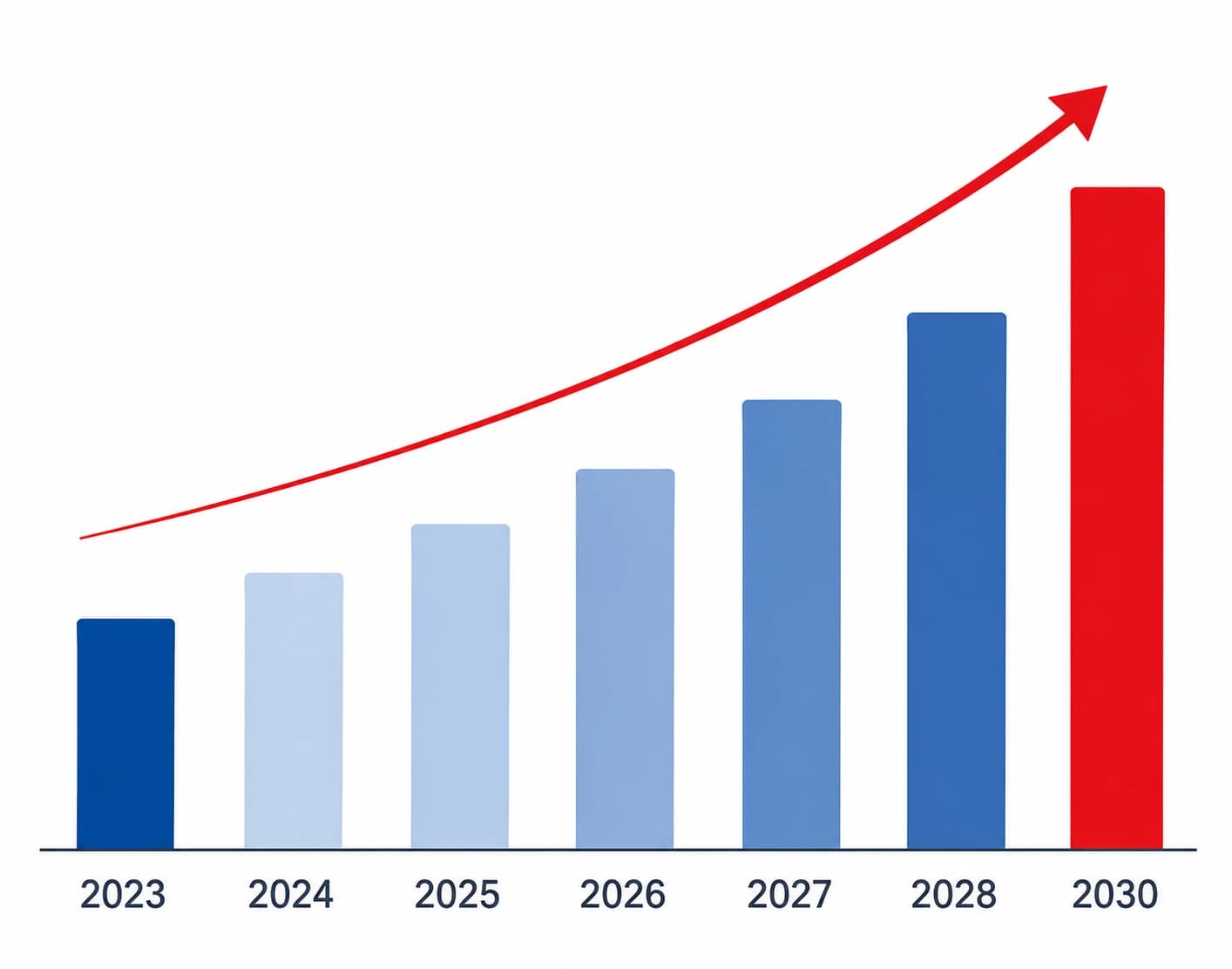
The global market for Heterogeneous AI Compute Resource Management and Scheduling Platform was estimated to be worth US$ 1400 million in 2025 and is projected to reach US$ 7749 million, growing at a CAGR of 26.4% from 2026 to 2032.
The Heterogeneous AI Compute Resource Management and Scheduling Platform market covers software and platform services that abstract, pool, virtualize or partition, schedule, govern, meter, monitor and orchestrate heterogeneous AI accelerators across on-premises, cloud and hybrid environments. Qualifying products manage multiple accelerator architectures or provide a vendor-neutral control layer with verifiable heterogeneous support. The revenue scope includes software licenses, subscriptions, recurring support directly tied to platform licenses, and separately charged managed-platform services. It excludes accelerator hardware, AI servers and appliances unless software value is separable, raw GPU, NPU or ASIC compute consumption, storage and networking charges, general-purpose Kubernetes infrastructure fees, generic MLOps functions not attributable to resource control, internal non-commercial platforms, developer toolchains and unrelated systems integration. This boundary isolates the resource-control and operating-software layer rather than the broader AI infrastructure market.
Full-stack heterogeneous compute control planes are the largest product-stack segment in the 2025 market structure estimate at approximately 45% of revenue
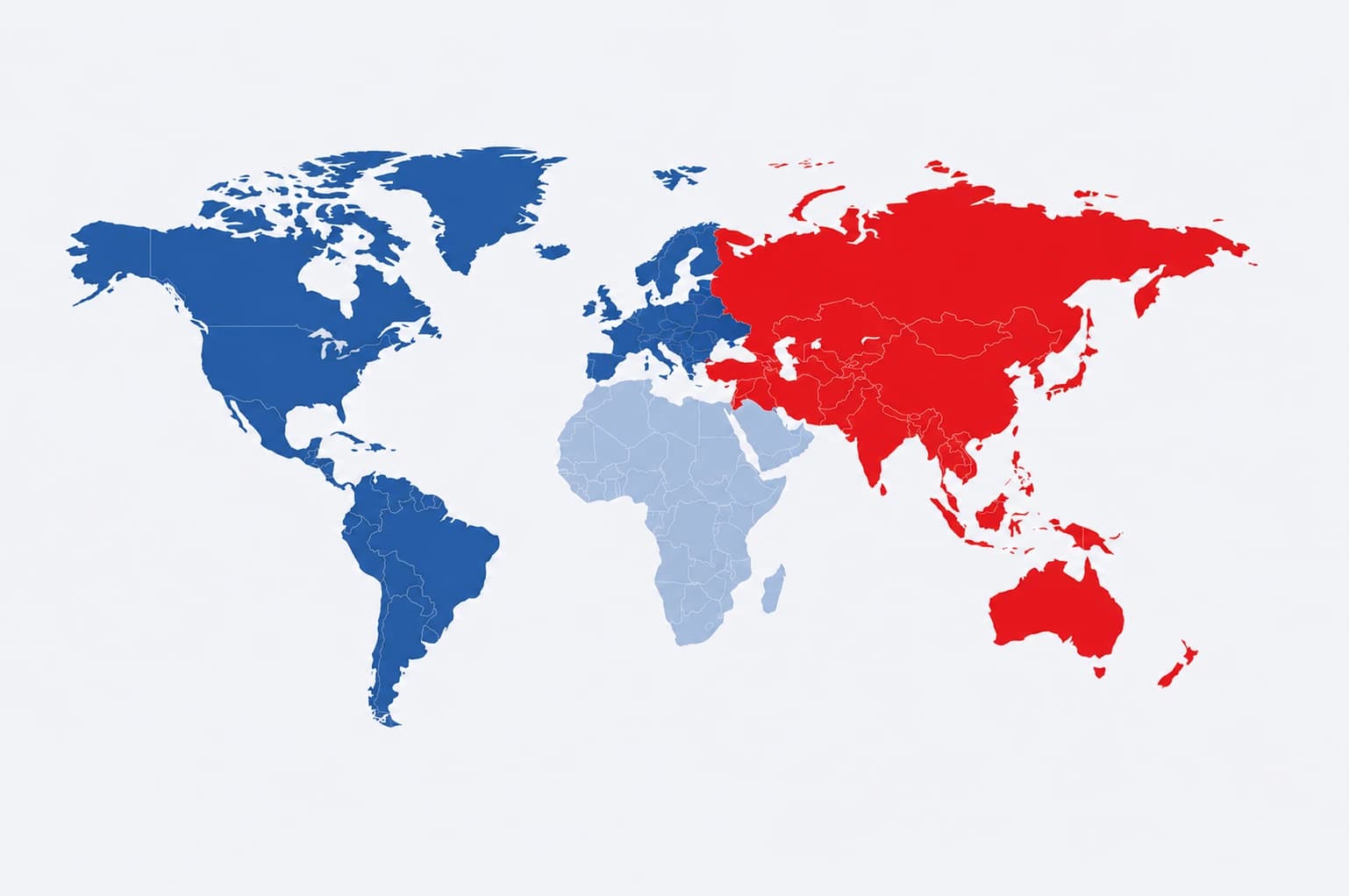
North America remains the largest demand region, while Asia-Pacific, EMEA and sovereign-AI markets are increasing their strategic importance
Inference is becoming a more important infrastructure workload and is expected to overtake training and fine-tuning in the broader AI infrastructure market in 2027
Selected current accelerator-priced commercial offerings show list prices of roughly US$1.6k–2.6k per accelerator-year
Basic device allocation and scheduling face increasing commoditization pressure from Kubernetes DRA and open-source heterogeneous resource management
The technology center of gravity is shifting from simple accelerator scheduling toward unified operation of heterogeneous AI infrastructure. Kubernetes 1.37 moved DRA Extended Resource support to GA, allowing DRA drivers to satisfy conventional extended-resource requests such as GPU requests without requiring a separate device plugin alongside the DRA driver. HAMi has advanced to CNCF Incubating and provides fractional allocation and scheduling across GPUs, NPUs, DCUs, MLUs and other accelerators. These developments standardize more of the low-level resource layer, pushing commercial suppliers toward higher-value functions such as multi-cluster governance, policy, billing, topology awareness and enterprise operations. At the same time, demand is becoming more continuous and inference-heavy. S&P Global expects inference-related AI infrastructure revenue to grow from US$101 billion in 2025 to US$532 billion in 2030 and to exceed training and fine-tuning in 2027, reinforcing the need for elastic placement, utilization optimization and persistent production control rather than only batch-oriented training scheduling.
Rapid AI infrastructure deployment expands the installed base requiring resource management. TrendForce raised its 2026 AI server shipment growth forecast to nearly 31% and estimates combined 2026 capital expenditure by nine major CSPs at more than US$886.7 billion. Hardware heterogeneity is also increasing as NVIDIA GPUs coexist with AMD accelerators, Google TPUs, AWS Trainium and regional AI chips, making abstraction, workload placement and cross-environment governance more valuable.
Commercial penetration is constrained by open-source software, in-house schedulers and hyperscaler-native control planes. Kubernetes DRA absorbs more device-allocation functionality into the base orchestration layer, while cloud platforms can bundle scheduling with compute consumption. Alibaba Cloud illustrates the monetization issue clearly: its Cloud-native AI Suite has been free of charge since June 6, 2024, while the underlying ACK cluster and other cloud resources remain separately billable. Target control functionality can therefore be economically important without appearing as standalone platform-software revenue.
The strongest opportunities are in environments where complexity cannot be solved by a single-cloud native scheduler: multi-cluster private AI, sovereign AI, heterogeneous accelerator estates, regulated and air-gapped deployments, GPU cloud and neocloud operations, and shared enterprise AI factories. China’s national compute-interconnection policy targets standardized interconnection and cross-provider, cross-architecture and cross-region compute scheduling by 2026, reinforcing demand for interoperable control and resource-governance layers.
The major challenge is converting growing managed infrastructure into separately monetized software revenue. Large customers can build internal schedulers, negotiate volume discounts or use bundled native services. Physical deployment can also be delayed by power, networking, memory and data-center constraints. Vendors therefore need to demonstrate that higher-level governance, utilization, cost control and operational automation create enough value to sustain paid software economics as basic scheduling becomes increasingly standardized.
The upstream layer consists of accelerator architectures, vendor drivers and operators, Kubernetes resource interfaces, container runtimes and related infrastructure-enablement components. Hardware ecosystems expose device-management capabilities, while Kubernetes DRA is increasingly standardizing how accelerator resources are represented and allocated. The target market occupies the middle control layer: it transforms raw accelerator capacity into governed resource pools through virtualization, scheduling, quotas, policy, topology awareness, monitoring, metering and workload orchestration. Downstream customers include enterprise AI platform teams, hyperscalers, neoclouds, sovereign cloud operators, telecom operators, research organizations and regulated institutions.
Value creation is increasingly concentrated above the lowest device-management layer. Dynamia’s current AWS Marketplace offer, for example, is priced per accelerator and covers NVIDIA GPU models as well as AWS Neuron. Its current one-month list prices range from US$133 to US$216 per accelerator depending on chip type, while 12-, 24- and 36-month contracts offer discounts of up to approximately 38%, 39% and 44%, respectively. Other suppliers monetize through node, cluster, subscription or custom-enterprise contracts. This diversity means end-customer GPU expenditure, server expenditure and cloud-consumption charges cannot be treated as software-platform revenue.
By product stack depth, the 2025 structure estimate places full-stack heterogeneous compute control planes at approximately 45% of revenue, compared with about 25% for heterogeneous virtualization and scheduling software layers and 30% for embedded resource-management modules within broader AI infrastructure platforms. The structural direction is toward full-stack control planes because basic allocation and sharing functions are becoming increasingly standardized, while enterprises still require multi-cluster administration, tenant governance, observability, policy enforcement and chargeback. The underlying category distinction is supported by actual commercial product structures in which basic virtualization and scheduling can be separated from a broader control plane.
Application demand spans development and data preparation, training and fine-tuning, inference and serving, and qualifying HPC or scientific workloads. The most important structural shift is toward inference. Commercial platforms increasingly support the same accelerated estate across development, training and production serving, reducing the relevance of isolated workload-specific infrastructure and increasing the importance of dynamic resource allocation and lifecycle-wide governance. AWS HyperPod, for example, supports both Slurm and Amazon EKS orchestration, and current HyperPod capabilities extend the same resilient infrastructure into both training and production inference.
Downstream Market Opportunities
The largest downstream opportunity is not simply selling another GPU scheduler; it is turning scarce and heterogeneous accelerator capacity into a controlled, self-service and economically measurable internal or external service. Enterprise customers require fair-share access, quota policies, hybrid-cloud placement and auditability. Neocloud and sovereign-AI operators add multi-tenancy, service catalogs, usage visibility and monetization. Rafay’s current platform illustrates this shift by orchestrating Kubernetes, virtual machines, Slurm, bare metal, GPUs and AI services while providing multi-tenancy, policy controls, usage visibility and automation for neoclouds, telecom operators, sovereign AI clouds and enterprises. Regulated industries and research environments also create opportunities where private deployment, hardware neutrality and high utilization are more important than access to a single public-cloud accelerator fleet.
North America remains the largest demand center because of hyperscaler investment, AI model development and a deep ecosystem of independent infrastructure software. Broader AI infrastructure forecasts continue to indicate faster growth in several markets outside North America, supporting a gradual geographic diversification of demand rather than a reversal of North America’s leading position. The market outlook therefore retains North America as the largest region while expecting Asia-Pacific, Europe and sovereign-AI markets to become progressively more important.
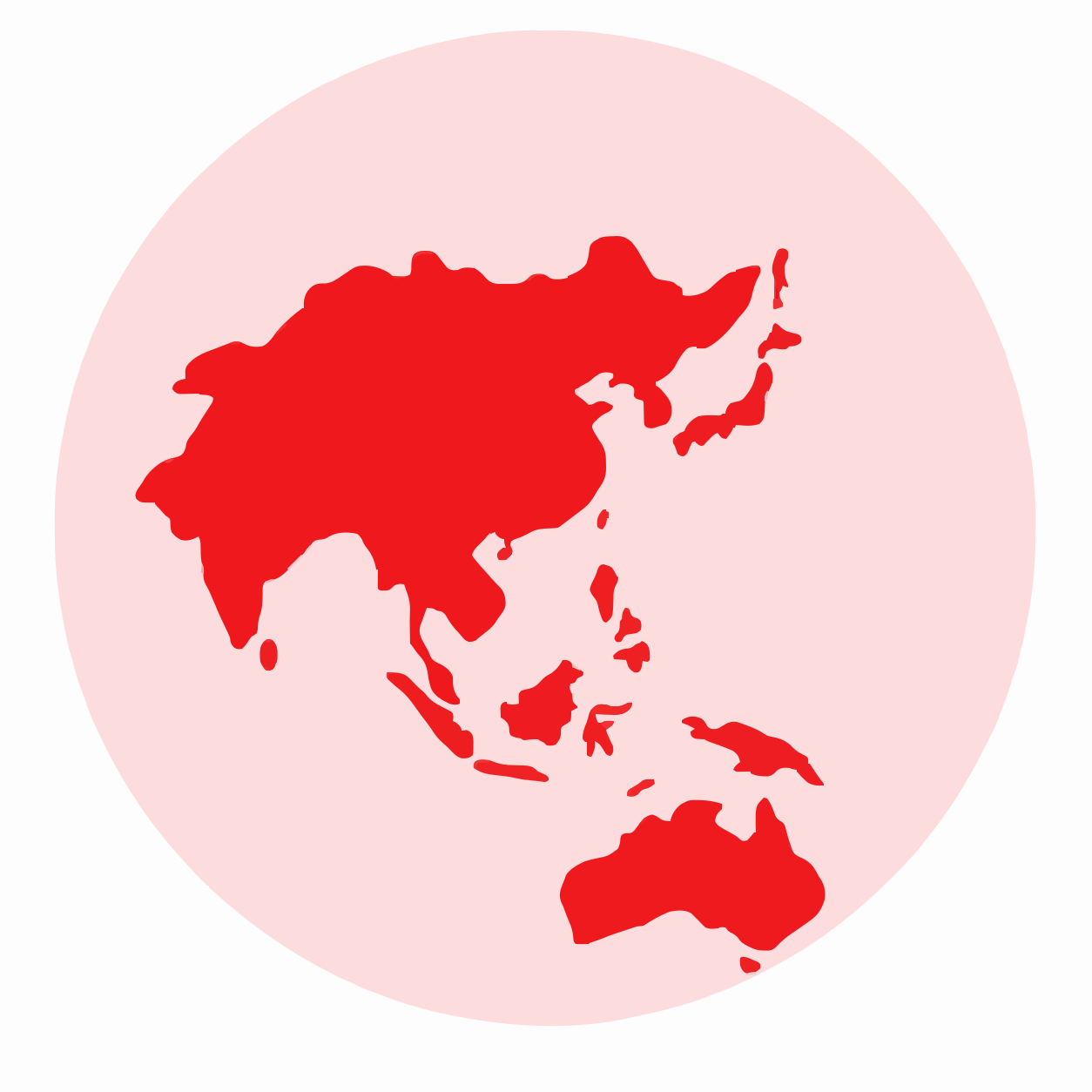
Asia-Pacific has a distinct heterogeneous-infrastructure opportunity. China is expanding cross-provider and cross-architecture compute interconnection, while Korea and Taiwan host suppliers spanning independent control-plane software and integrated hardware-software platforms. Lablup reports Backend.AI deployments at more than 120 sites and support for heterogeneous accelerators including NVIDIA, AMD and Intel GPUs as well as domestic and international NPUs. EMEA and the Middle East are also gaining importance as sovereign AI, local data-center capacity and regulatory requirements increase demand for private, hybrid and geographically controlled AI infrastructure.
Competitive Landscape Analysis
Competition is fragmented across several business models rather than organized around a single homogeneous vendor class. Independent control-plane suppliers compete on hardware neutrality, multi-cluster operations, utilization and governance; ClearML, for example, supports Kubernetes, Slurm, PBS and bare-metal environments and lists compatibility with NVIDIA, AMD, Arm and Intel hardware platforms. Cloud providers such as AWS and Google compete through native scheduling integrated directly with infrastructure: AWS HyperPod supports Slurm and Amazon EKS orchestration, while Google Dynamic Workload Scheduler is designed to manage access to NVIDIA GPUs and Google TPUs as part of AI Hypercomputer. Integrated infrastructure suppliers and sovereign-AI operators add another competitive layer by bundling control software with private-cloud, server, GPUaaS or AI-factory offerings.
Comparable global vendor revenue data remain insufficient for a defensible exact market ranking, so competitive position is better assessed through product scope, deployment scale, hardware breadth, channel reach and customer type than through unsupported precise shares. Hardware-neutral full-stack platforms have a strategic position in heterogeneous and multi-environment deployments, while hyperscaler-native tools are strong substitutes for customers concentrated on a single cloud. Open-source and Kubernetes-native capabilities place continued pressure on basic scheduling products, making enterprise governance and operational depth the main area of commercial differentiation.
This report provides a comprehensive view of the global market for Heterogeneous AI Compute Resource Management and Scheduling Platform, covering total sales revenue, the market share and ranking of key companies, along with analyses by region & country, by Type, and by Application.
The Heterogeneous AI Compute Resource Management and Scheduling Platform market size, estimations, and forecasts are presented in terms of sales revenue ($ millions), with 2025 as the base year and historical and forecast data from 2021 to 2032. The report combines quantitative and qualitative analysis to help readers develop growth strategies, assess the competitive landscape, evaluate their position in the current marketplace, and make informed business decisions regarding Heterogeneous AI Compute Resource Management and Scheduling Platform.
Chapter 1: Introduces the scope of the report and the global market size (value). It also summarizes market dynamics and recent developments; identifies key drivers and restraints; outlines challenges and risks for players; reviews relevant industry policies.
Chapter 2: Provides a detailed analysis of the Heterogeneous AI Compute Resource Management and Scheduling Platform companies' competitive landscape—including revenue shares, recent development plans, and mergers and acquisitions (M&A).
Chapter 3: Analyzes market segmentation by Type, presenting the size and growth potential of each segment to help readers identify blue-ocean opportunities.
Chapter 4: Analyzes market segmentation by Application, presenting the size and growth potential of each downstream segment to help readers identify blue-ocean opportunities.
Chapter 5: Presents Heterogeneous AI Compute Resource Management and Scheduling Platform revenue at the regional level. It offers a quantitative assessment of market size and growth potential by region and summarizes market development, future prospects, addressable space, and country-level market size worldwide.
Chapter 6: Presents Heterogeneous AI Compute Resource Management and Scheduling Platform revenue at the country level. It provides segmented data by Type and by Application for each country/region.
Chapter 7: Profiles key players, detailing the main companies' product revenue, gross margin, product portfolios, recent developments, etc.
Chapter 8: Analysis of Value Chain, including the upstream and downstream of the industry.
- ★ What Is The Overall Market Size And Projected Growth Rate Across Global And Regional Segments?
- ★ How Does The Market Size And Growth Outlook Vary Across Major Countries?
- ★ Which Region Or Market Sub-Segment Is Anticipated To Dominate Growth During The Forecast Period?
- ★ What Are The Primary Factors Expected To Drive Market Expansion, And What Challenges May Restrain Growth?
- ★ Which Emerging Technologies And Market Trends Are Shaping The Future Landscape?
- ★ What Are The Most Significant Opportunities Available In The Market?
- ★ Who Are The Leading Manufacturers Actively Participating In The Global Market?
- ★ Which Company Currently Holds The Largest Share Of The Market?
- ★ What Are The Potential Growth Avenues For New Entrants In The Global Market?