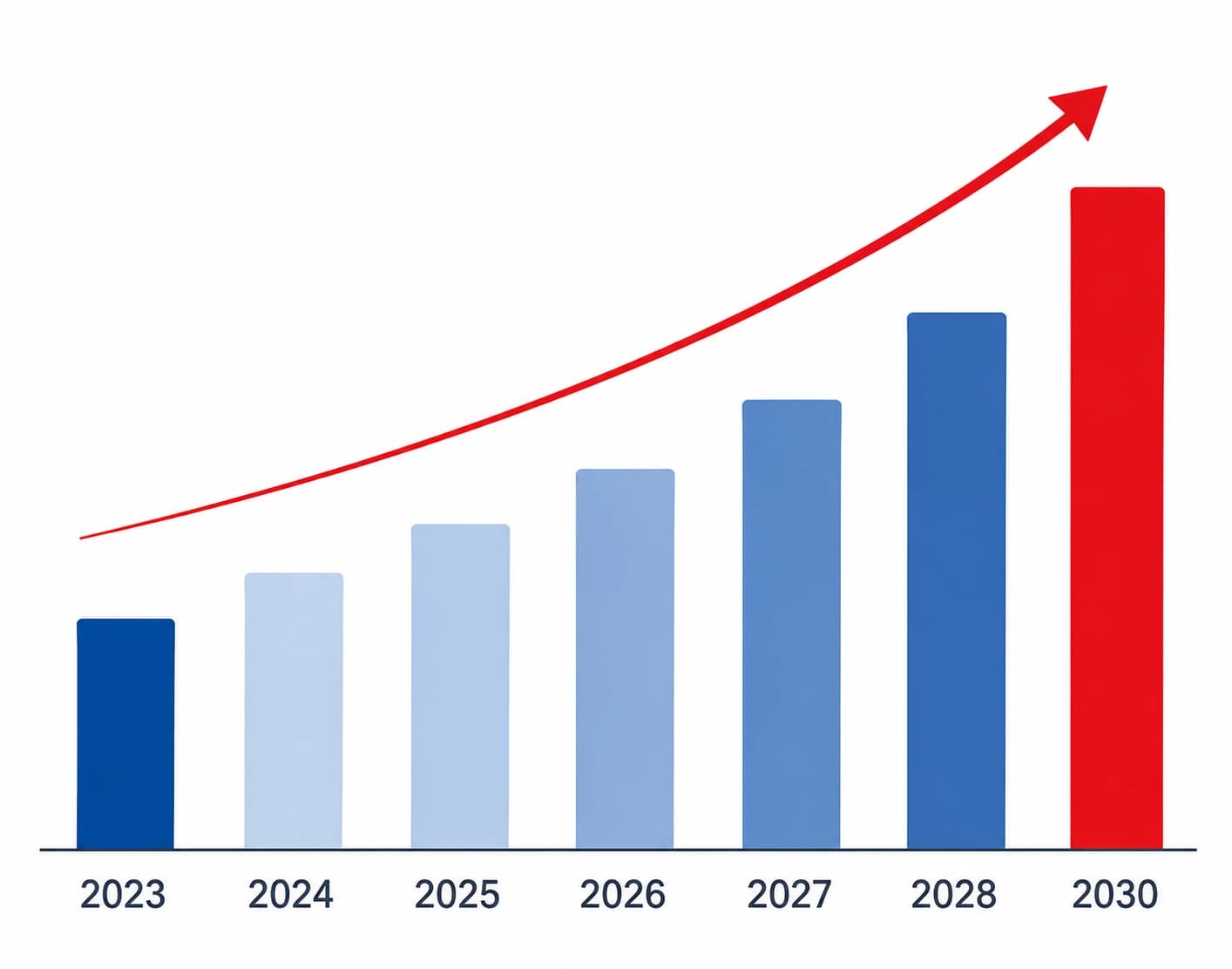
The global Risk Assessment and Management Tool market was valued at US$ 514 million in 2025 and is anticipated to reach US$ 786 million by 2032, witnessing a CAGR of 6.2% during the forecast period 2026-2032.
Risk Assessment and Management Tools are software platforms or digital solutions designed to enable enterprises, government agencies, and organizations to conduct risk identification, analysis, assessment, monitoring, and control. By integrating business data, historical incident records, regulatory requirements, and internal control information, these tools help users establish systematic risk management processes, enabling quantitative risk analysis, risk classification, early warning notifications, and decision-making support. Key functions include risk registers, risk matrix analysis, control management, incident tracking, compliance management, audit support, and risk report generation. Driven by corporate globalization, tightening regulations, and escalating risks in supply chains and cybersecurity, these tools have become integral to corporate governance. They are widely deployed across sectors such as finance, manufacturing, energy, healthcare, information security, government, and large conglomerates to enhance risk transparency, optimize resource allocation, and mitigate potential losses.
The Risk Assessment and Management Tool industry is currently experiencing rapid growth in the digital management of corporate risk. Key opportunities lie in areas such as AI-driven risk prediction, Enterprise Risk Management (ERM) upgrades, cybersecurity risk management, supply chain risk monitoring, ESG risk management, and the digitalization of regulatory compliance. As global economic uncertainty rises, enterprises face expanding operational, financial, technological, and compliance risks, driving an increasing demand for real-time risk identification and proactive prevention capabilities. Core industry competitiveness is defined by capabilities in risk modeling, data integration, AI analysis, industry knowledge bases, automated workflows, and system integration (e.g., with ERP, GRC, financial, and security management systems). Platforms offering real-time monitoring, intelligent early warning systems, and predictive analytics hold a distinct competitive advantage. Current industry pain points include fragmented risk data, inefficient manual assessments, inconsistent risk standards, insufficient cross-departmental collaboration, and limited prediction accuracy within complex business environments. To address these challenges, the industry is leveraging cloud computing, big data, machine learning, natural language processing, and automated workflow technologies to enhance risk management efficiency. Overall, risk assessment and management tools are evolving from traditional risk logging and compliance software into intelligent, predictive risk governance platforms, with adoption set to expand across sectors such as finance, industry, energy, healthcare, and government.
This report aims to provide a comprehensive presentation of the global market for Risk Assessment and Management Tool, with both quantitative and qualitative analysis, to help readers develop business/growth strategies, assess the market competitive situation, analyze their position in the current marketplace, and make informed business decisions regarding Risk Assessment and Management Tool.
The Risk Assessment and Management Tool market size, estimations, and forecasts are provided in terms of revenue ($ millions), considering 2025 as the base year, with history and forecast data for the period from 2021 to 2032. This report segments the global Risk Assessment and Management Tool market comprehensively. Regional market sizes, concerning products by Type, by Application, and by players, are also provided.
For a more in-depth understanding of the market, the report provides profiles of the competitive landscape, key competitors, and their respective market ranks. The report also discusses technological trends and new product developments.
The report will help the Risk Assessment and Management Tool manufacturers, new entrants, and industry chain related companies in this market with information on the revenues for the overall market and the sub-segments across the different segments, by company, by Type, by Application, and by regions.
Chapter 1: Introduces the report scope of the report, executive summary of different market segments (by region, product type, application, etc), including the market size of each market segment, future development potential, and so on. It offers a high-level view of the current state of the market and its likely evolution in the short to mid-term, and long term.
Chapter 2: key insights, key emerging trends, etc.
Chapter 3: Manufacturers competitive analysis, detailed analysis of Risk Assessment and Management Tool manufacturers competitive landscape, revenue market share, latest development plan, merger, and acquisition information, etc.
Chapter 4: Provides profiles of key players, introducing the basic situation of the main companies in the market in detail, including product revenue, gross margin, product introduction, recent development, etc.
Chapter 5 & 6: Revenue of Risk Assessment and Management Tool in regional level and country level. It provides a quantitative analysis of the market size and development potential of each region and its main countries and introduces the market development, future development prospects, market space, and market size of each country in the world.
Chapter 7: Provides the analysis of various market segments by Type, covering the market size and development potential of each market segment, to help readers find the blue ocean market in different market segments.
Chapter 8: Provides the analysis of various market segments by Application, covering the market size and development potential of each market segment, to help readers find the blue ocean market in different downstream markets.
Chapter 9: Analysis of industrial chain, including the upstream and downstream of the industry.
Chapter 10: The main points and conclusions of the report.
- ★ What Is The Overall Market Size And Projected Growth Rate Across Global And Regional Segments?
- ★ How Does The Market Size And Growth Outlook Vary Across Major Countries?
- ★ Which Region Or Market Sub-Segment Is Anticipated To Dominate Growth During The Forecast Period?
- ★ What Are The Primary Factors Expected To Drive Market Expansion, And What Challenges May Restrain Growth?
- ★ Which Emerging Technologies And Market Trends Are Shaping The Future Landscape?
- ★ What Are The Most Significant Opportunities Available In The Market?
- ★ Who Are The Leading Manufacturers Actively Participating In The Global Market?
- ★ Which Company Currently Holds The Largest Share Of The Market?
- ★ What Are The Potential Growth Avenues For New Entrants In The Global Market?