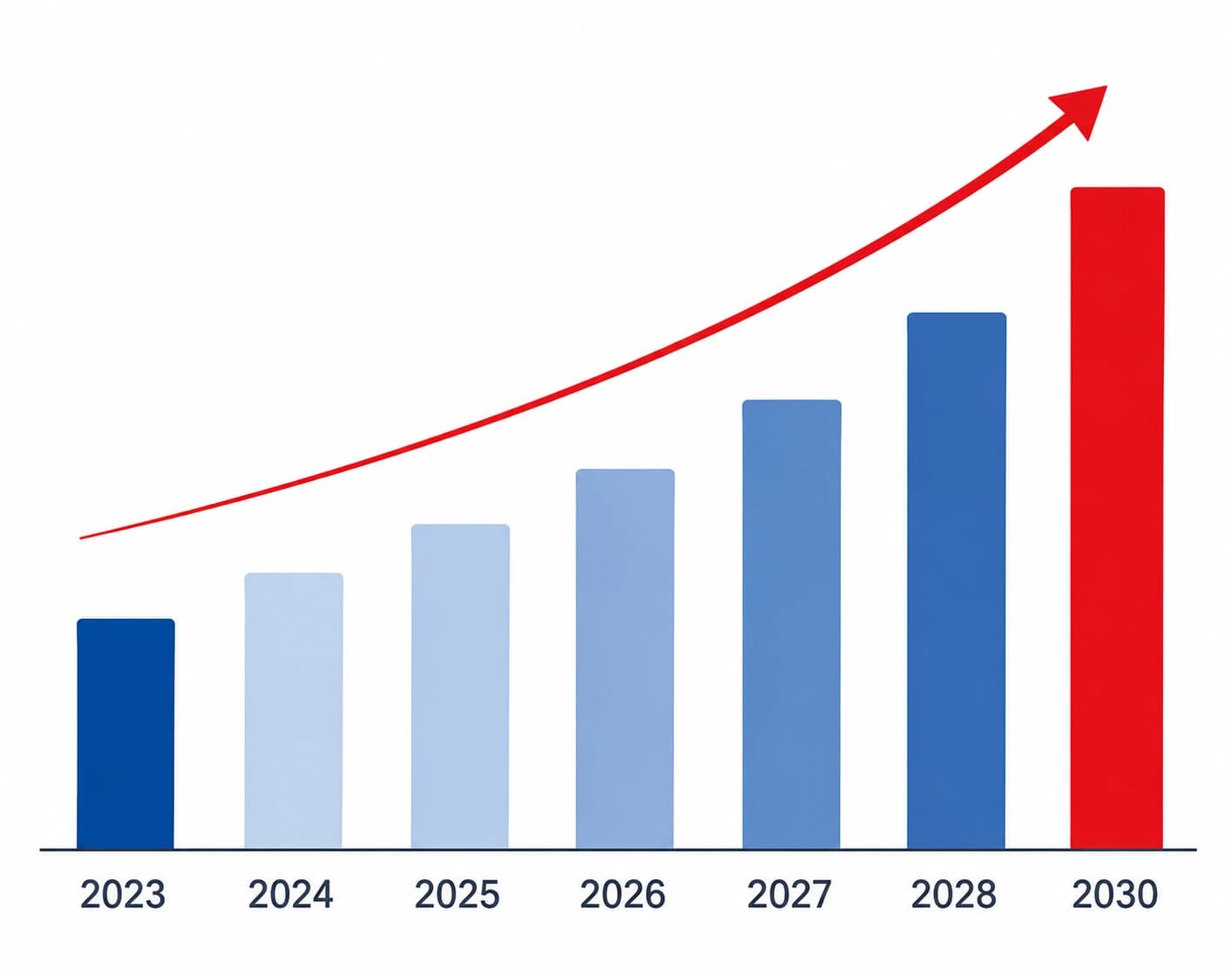
The global Sheet Metal Cupping Testing Machine market was valued at US$ 418 million in 2025 and is anticipated to reach US$ 625 million by 2032, at a CAGR of 6.1% from 2026 to 2032.
The 2025 U.S. tariff policies introduce profound uncertainty into the global economic landscape. This report critically examines the implications of recent tariff adjustments and international strategic countermeasures on Sheet Metal Cupping Testing Machine competitive dynamics, regional economic interdependencies, and supply chain reconfigurations.
The sheet metal cupping tester is a material testing device used to evaluate the plastic deformation capacity, ductility, stamping formability, and coating adhesion stability of thin metal sheets and strips. Typically, after clamping a specimen, a spherical punch is gradually pressed into the sheet; the device records the cupping depth, maximum load, displacement changes, and the status of crack formation to assess the sheet's forming performance under tensile expansion conditions. The system primarily consists of a machine frame, a hydraulic or servo loading system, a clamping mechanism, a spherical punch, displacement sensors, load sensors, specimen fixtures, control software, and a safety protection system. In 2025, global sales of sheet metal cupping testers are projected to reach approximately 32,650 units, with an average unit price of approximately $12,800 and a capacity utilization rate of approximately 69%. Upstream enterprises in the supply chain primarily encompass sectors such as servo motors, hydraulic components, precision lead screws, load sensors, displacement sensors, controllers, industrial software, machined structural components, fixtures and molds, and testing and calibration services. Downstream enterprises mainly include those in automotive manufacturing, metallurgy and steel production, non-ferrous metal processing, home appliance manufacturing, general machinery manufacturing, aerospace, medical devices, metal packaging, quality inspection agencies, research institutes, and university laboratories; the industry's average gross profit margin stands at approximately 35%. Regarding the product cost structure, the machine frame and mechanical structural components account for approximately 22%; the loading system accounts for about 19%; sensors and measurement modules account for about 13%; fixtures and punch assemblies account for about 10%; the control system and software account for about 12%; assembly, debugging, and calibration account for about 9%; quality inspection and certification account for about 5%; packaging and logistics account for about 4%; and R&D, quality assurance, and after-sales services account for about 6%. The list of downstream demand encompasses the inspection of automotive body panels, formability testing of cold-rolled steel sheets, ductility assessment of galvanized steel, validation of stamping performance for thin aluminum alloy sheets, cupping tests for thin stainless steel sheets, adhesion testing of coated metal sheets, quality control for metal packaging materials, incoming material inspection for home appliance casings, R&D of thin-sheet aerospace materials, and materials laboratory instruction at universities. The list of downstream clients includes Baosteel, Ansteel, Shougang Group, HBIS Group, Novelis, Constellium, Baowu Aluminum, BYD, SAIC Group, FAW Group, GAC Group, Haier, Midea, Gree, Sany Heavy Industry, national quality inspection agencies, third-party testing laboratories, materials research institutes, and university materials science departments. In terms of business opportunities, policy-driven factors stem from the push for automotive lightweighting, quality enhancement in the manufacturing sector, standardized testing of metal materials, green manufacturing initiatives, and the requirement for domestic substitution of high-end equipment. Technological innovation drivers include servo loading systems, high-precision displacement measurement, automated crack detection, digital image acquisition, data traceability, intelligent calibration, and integration with Laboratory Information Management Systems (LIMS). Finally, evolving consumer demands are reflected in clients placing greater emphasis on test result repeatability, operational safety, automation levels, data traceability, ease of fixture replacement, equipment stability, and long-term maintenance costs.
Sheet metal cupping testers constitute a specialized niche within the broader category of metal material formability testing equipment. While the market size is not particularly large, demand remains highly stable. Core clients include steel mills, automotive sheet suppliers, auto parts manufacturers, home appliance panel producers, metal packaging plants, research institutions, and third-party testing laboratories. Driven by trends such as automotive lightweighting, the integration of structural components in new energy vehicles, the demand for high-quality surface finishes in home appliances, and the increasing utilization of materials like high-strength steel, aluminum alloys, and stainless steel, downstream clients are placing ever-higher demands on the evaluation of sheet metal formability. Traditional testing methods—which focus solely on tensile strength and elongation—are no longer sufficient to fully address the risks associated with stamping cracks, localized deformation, and coating damage; consequently, the importance of the cupping test has become increasingly prominent. In 2025, industry competition is expected to center on load control precision, displacement measurement accuracy, clamping stability, punch wear resistance, data software functionality, and compliance with testing standards. High-end equipment will place greater emphasis on automated data recording, image-assisted analysis, test curve interpretation, and multi-standard testing templates, whereas entry-level equipment will primarily serve basic testing and educational requirements. International brands continue to hold advantages in high-precision sensing, long-term operational stability, and certification systems; meanwhile, Chinese enterprises are gradually expanding their market share by leveraging their strengths in cost control, localized service support, shorter delivery lead times, and customized fixture design capabilities. Future growth opportunities are expected to arise primarily from the upgrading of automotive sheet materials, increased demand for testing aluminum alloys and high-strength steels, the expansion of third-party testing agencies, laboratory automation upgrades, and the ongoing drive for domestic substitution. However, the industry also faces various risks, including long equipment replacement cycles, infrequent customer purchasing, price competition among entry-level models, increasingly stringent requirements for calibration services, and fluctuations in testing budgets among certain enterprises. Overall, the sheet metal cupping tester is a quintessential example of highly specialized testing equipment characterized by low-frequency purchasing but strong customer loyalty; to enhance their competitiveness, enterprises must differentiate themselves through superior measurement accuracy, advanced automation software, adaptability to various standards, comprehensive after-sales calibration services, and industry-specific application solutions.
This report delivers a comprehensive overview of the global Sheet Metal Cupping Testing Machine market, with both quantitative and qualitative analyses, to help readers develop growth strategies, assess the competitive landscape, evaluate their position in the current market, and make informed business decisions regarding Sheet Metal Cupping Testing Machine. The Sheet Metal Cupping Testing Machine market size, estimates, and forecasts are provided in terms of output/shipments (Units) and revenue (US$ millions), with 2025 as the base year and historical and forecast data for 2021–2032.
The report segments the global Sheet Metal Cupping Testing Machine market comprehensively. Regional market sizes by Type, by Application, by Maximum Clamping Load, and by company are also provided. For deeper insight, the report profiles the competitive landscape, key competitors, and their respective market rankings, and discusses technological trends and new product developments.
This report will assist Sheet Metal Cupping Testing Machine manufacturers, new entrants, and companies across the industry value chain with information on revenues, production, and average prices for the overall market and its sub-segments, by company, by Type, by Application, and by region.
Chapter 1: Defines the scope of the report and presents an executive summary of market segments (by Type, by Application, by Maximum Clamping Load, etc.), including the size of each segment and its future growth potential. It offers a high-level view of the current market and its likely evolution in the short, medium, and long term.
Chapter 2: Provides a detailed analysis of the competitive landscape for Sheet Metal Cupping Testing Machine manufacturers, including prices, production, value-based market shares, latest development plans, and information on mergers and acquisitions.
Chapter 3: Examines Sheet Metal Cupping Testing Machine production/output and value by region and country, providing a quantitative assessment of market size and growth potential for each region over the next six years.
Chapter 4: Analyzes Sheet Metal Cupping Testing Machine consumption at the regional and country levels. It quantifies market size and growth potential for each region and its key countries, and outlines market development, outlook, addressable space, and national production.
Chapter 5: Analyzes market segments by Type, covering the size and growth potential of each segment to help readers identify “blue ocean” opportunities.
Chapter 6: Analyzes market segments by Application, covering the size and growth potential of each segment to help readers identify “blue ocean” opportunities in downstream markets.
Chapter 7: Profiles key players, detailing the fundamentals of major companies, including product production/output, value, price, gross margin, product portfolio/introductions, and recent developments.
Chapter 8: Reviews the industry value chain, including upstream and downstream segments.
Chapter 9: Discusses market dynamics and recent developments, including drivers, restraints, challenges and risks for manufacturers, U.S. Tariffs and relevant policy analysis.
Chapter 10: Summarizes the key findings and conclusions of the report.
- ★ What Is The Overall Market Size And Projected Growth Rate Across Global And Regional Segments?
- ★ How Does The Market Size And Growth Outlook Vary Across Major Countries?
- ★ Which Region Or Market Sub-Segment Is Anticipated To Dominate Growth During The Forecast Period?
- ★ What Are The Primary Factors Expected To Drive Market Expansion, And What Challenges May Restrain Growth?
- ★ Which Emerging Technologies And Market Trends Are Shaping The Future Landscape?
- ★ What Are The Most Significant Opportunities Available In The Market?
- ★ Who Are The Leading Manufacturers Actively Participating In The Global Market?
- ★ Which Company Currently Holds The Largest Share Of The Market?
- ★ What Are The Potential Growth Avenues For New Entrants In The Global Market?