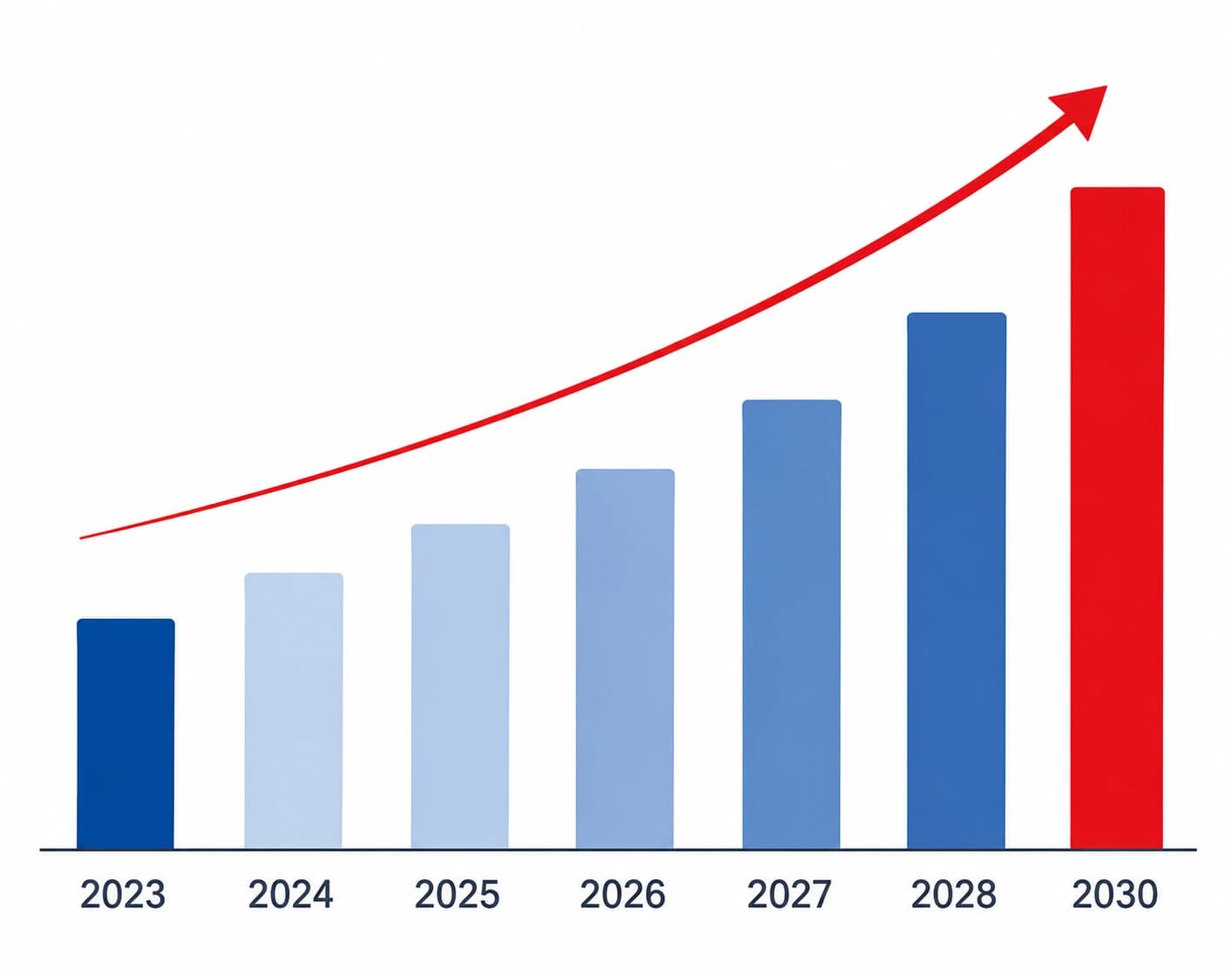
The global HDMI Optical Fiber Extender market was valued at US$ 226 million in 2025 and is anticipated to reach US$ 299 million by 2032, at a CAGR of 4.2% from 2026 to 2032.
The 2025 U.S. tariff policies introduce profound uncertainty into the global economic landscape. This report critically examines the implications of recent tariff adjustments and international strategic countermeasures on HDMI Optical Fiber Extender competitive dynamics, regional economic interdependencies, and supply chain reconfigurations.
In 2025, the production volume of HDMI fiber optic extenders is projected to reach 561,500 units, with an average selling price of $402 per unit. The global annual production capacity for HDMI fiber optic extenders stands at approximately 800,000 units, with a gross margin of approximately 28.4%. An HDMI fiber optic extender is a device designed to transmit HDMI video and audio signals over long distances. It achieves long-range, high-bandwidth, and interference-resistant transmission by converting HDMI signals into optical signals for transmission through fiber optic cables, and subsequently converting these optical signals back into HDMI signals at the receiving end. The upstream segment of the HDMI fiber optic extender industry chain comprises components such as optical modules and transceiver chips, fiber optic cables and materials, and elements related to optical interfaces and circuit design. The midstream segment consists of the manufacturers of HDMI fiber optic extenders, while the downstream segment primarily serves industries such as multimedia, command and control centers, and healthcare.
The market for HDMI fiber optic extenders is currently in a phase of rapid expansion, driven by the widespread adoption of high-definition audio-visual technologies and growing consumer demand for high-quality viewing experiences. With the broad application of 4K and 8K resolutions, as well as High Dynamic Range (HDR) technology, the issue of signal attenuation over long distances—inherent in traditional copper cabling—has become increasingly pronounced. Consequently, fiber optic extenders have emerged as the preferred solution for environments such as large venues, conference systems, surveillance centers, and home theaters, thanks to their superior advantages in transmission range, interference immunity, and signal stability. The market offers a diverse array of products, encompassing point-to-point, point-to-multipoint, and mesh network topologies; these devices support features such as "plug-and-play" functionality and remote power supply. Furthermore, certain high-end models integrate advanced capabilities—including video switching, audio extraction, and network transmission—to meet the demands of complex application scenarios. Concurrently, as fiber optic technology matures and manufacturing costs decline, product pricing is becoming increasingly affordable, thereby further accelerating market penetration. Nevertheless, the market still faces certain challenges; for instance, some products exhibit limitations regarding signal stability and compatibility. Moreover, market competition remains fierce, characterized by a convergence of product features and a relative lack of differentiation among competing offerings. Looking ahead, with the integration of emerging technologies such as 5G and the Internet of Things (IoT), HDMI fiber optic extenders are poised to evolve toward greater integration, network connectivity, and intelligence, promising to play an increasingly pivotal role in sectors such as smart buildings and distributed audio-visual systems.
This report delivers a comprehensive overview of the global HDMI Optical Fiber Extender market, with both quantitative and qualitative analyses, to help readers develop growth strategies, assess the competitive landscape, evaluate their position in the current market, and make informed business decisions regarding HDMI Optical Fiber Extender. The HDMI Optical Fiber Extender market size, estimates, and forecasts are provided in terms of output/shipments (K Units) and revenue (US$ millions), with 2025 as the base year and historical and forecast data for 2021–2032.
The report segments the global HDMI Optical Fiber Extender market comprehensively. Regional market sizes by Type, by Application, by Transmission Distance, and by company are also provided. For deeper insight, the report profiles the competitive landscape, key competitors, and their respective market rankings, and discusses technological trends and new product developments.
This report will assist HDMI Optical Fiber Extender manufacturers, new entrants, and companies across the industry value chain with information on revenues, production, and average prices for the overall market and its sub-segments, by company, by Type, by Application, and by region.
Chapter 1: Defines the scope of the report and presents an executive summary of market segments (by Type, by Application, by Transmission Distance, etc.), including the size of each segment and its future growth potential. It offers a high-level view of the current market and its likely evolution in the short, medium, and long term.
Chapter 2: Provides a detailed analysis of the competitive landscape for HDMI Optical Fiber Extender manufacturers, including prices, production, value-based market shares, latest development plans, and information on mergers and acquisitions.
Chapter 3: Examines HDMI Optical Fiber Extender production/output and value by region and country, providing a quantitative assessment of market size and growth potential for each region over the next six years.
Chapter 4: Analyzes HDMI Optical Fiber Extender consumption at the regional and country levels. It quantifies market size and growth potential for each region and its key countries, and outlines market development, outlook, addressable space, and national production.
Chapter 5: Analyzes market segments by Type, covering the size and growth potential of each segment to help readers identify “blue ocean” opportunities.
Chapter 6: Analyzes market segments by Application, covering the size and growth potential of each segment to help readers identify “blue ocean” opportunities in downstream markets.
Chapter 7: Profiles key players, detailing the fundamentals of major companies, including product production/output, value, price, gross margin, product portfolio/introductions, and recent developments.
Chapter 8: Reviews the industry value chain, including upstream and downstream segments.
Chapter 9: Discusses market dynamics and recent developments, including drivers, restraints, challenges and risks for manufacturers, U.S. Tariffs and relevant policy analysis.
Chapter 10: Summarizes the key findings and conclusions of the report.
- ★ What Is The Overall Market Size And Projected Growth Rate Across Global And Regional Segments?
- ★ How Does The Market Size And Growth Outlook Vary Across Major Countries?
- ★ Which Region Or Market Sub-Segment Is Anticipated To Dominate Growth During The Forecast Period?
- ★ What Are The Primary Factors Expected To Drive Market Expansion, And What Challenges May Restrain Growth?
- ★ Which Emerging Technologies And Market Trends Are Shaping The Future Landscape?
- ★ What Are The Most Significant Opportunities Available In The Market?
- ★ Who Are The Leading Manufacturers Actively Participating In The Global Market?
- ★ Which Company Currently Holds The Largest Share Of The Market?
- ★ What Are The Potential Growth Avenues For New Entrants In The Global Market?